Exercise to reduce blood pressure: what works and how to do it safely
Regular exercise lowers resting blood pressure by a few points within weeks, and the effect grows as it becomes a habit. Brisk walking is the foundation. Short isometric holds such as a wall sit or squeezing a soft ball have surprisingly strong evidence. Strength training with normal breathing is safe and helps too. The one rule that matters most: never hold your breath.
By the Omfit coaching team · Updated 12 September 2026 · 9 min read
High blood pressure rarely causes symptoms, which is why it is easy to ignore and hard to treat with willpower alone. Exercise is one of the few things that reliably brings the number down without a prescription, and it works alongside medicine rather than instead of it. Your tablets keep working. Exercise makes the blood vessels more relaxed and the heart more efficient, so the tablets have less to do.
The good news for parents over 55 is that the most effective exercises for blood pressure are also the gentlest. Walking, holding a light squat against a wall, squeezing a towel, and slow breathing all appear in the research. None of them needs equipment. What matters is doing them most days, warming up longer than a younger person would, and following the safety rules below, especially if you take BP medicine.
Why exercise lowers blood pressure1 min read
- Aerobic activity like walking makes the blood vessel walls more flexible, so blood flows with less resistance. Resting BP drops by a few mmHg over 8 to 12 weeks.
- Isometric holds, where a muscle stays tight without moving, briefly squeeze the vessels and then let them open wider. Repeated a few times a week, this trains the vessels to relax. Several studies have found isometric training lowers systolic BP more than walking alone.
- Strength training builds muscle and improves how the body handles sugar and fat, both of which affect BP over the long run.
- Slow breathing calms the nervous system that keeps BP high under stress, and it lowers BP for a while after each session.
The exercises3 min read
Exercise 1
Brisk walking
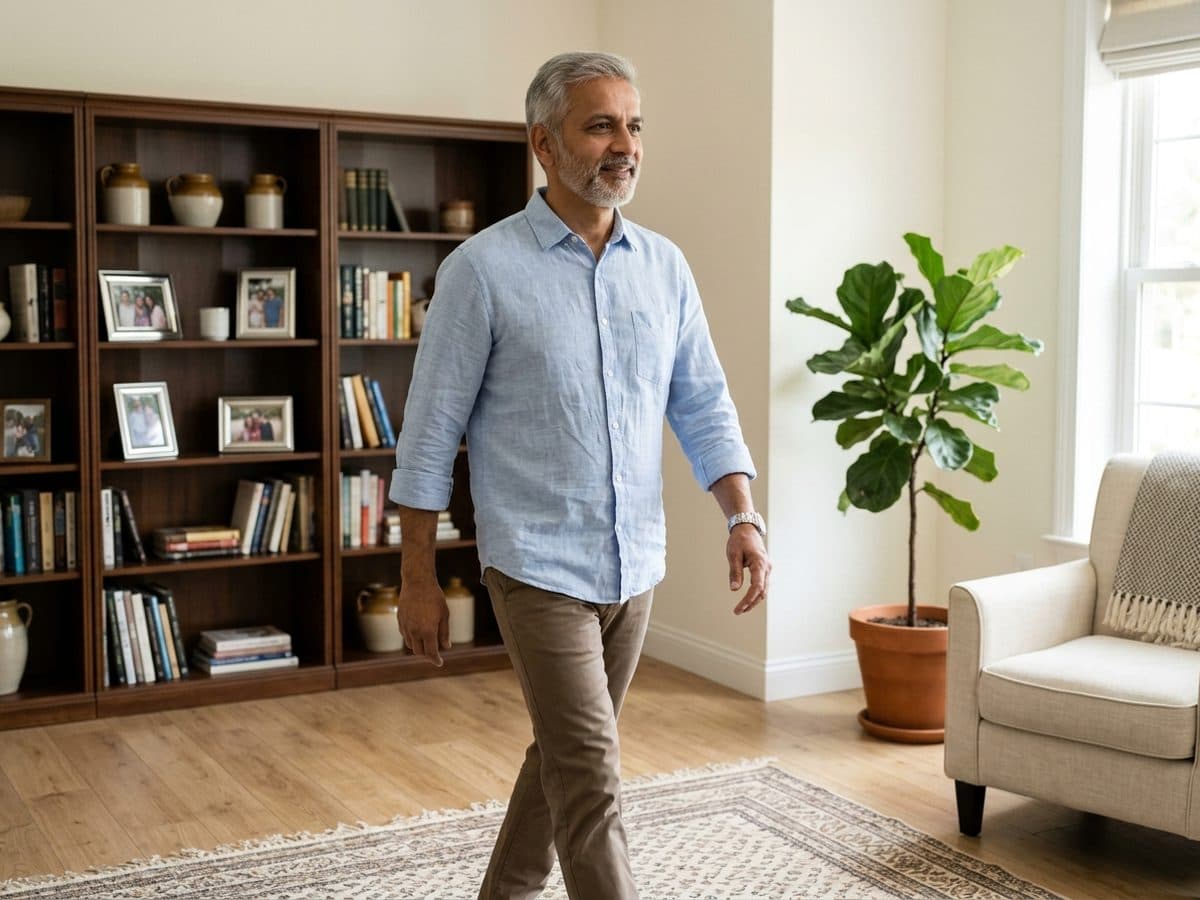
The best-studied exercise for blood pressure. Walking briskly most days lowers resting BP within a couple of months.
- Start with 5 minutes of slow walking to warm up.
- Pick up the pace until you can talk but not sing.
- Finish with 5 minutes of slow walking so the BP comes down gradually.
How much: 30 minutes a day, 5 days a week, in one walk or two or three shorter ones
Easier version: Begin with 10 minutes twice a day and add 5 minutes a week.
Stop if: Do not stop suddenly after a brisk walk; the slow cool-down prevents dizziness. Skip the walk on very hot afternoons or if you feel unwell.
Exercise 2
Seated march
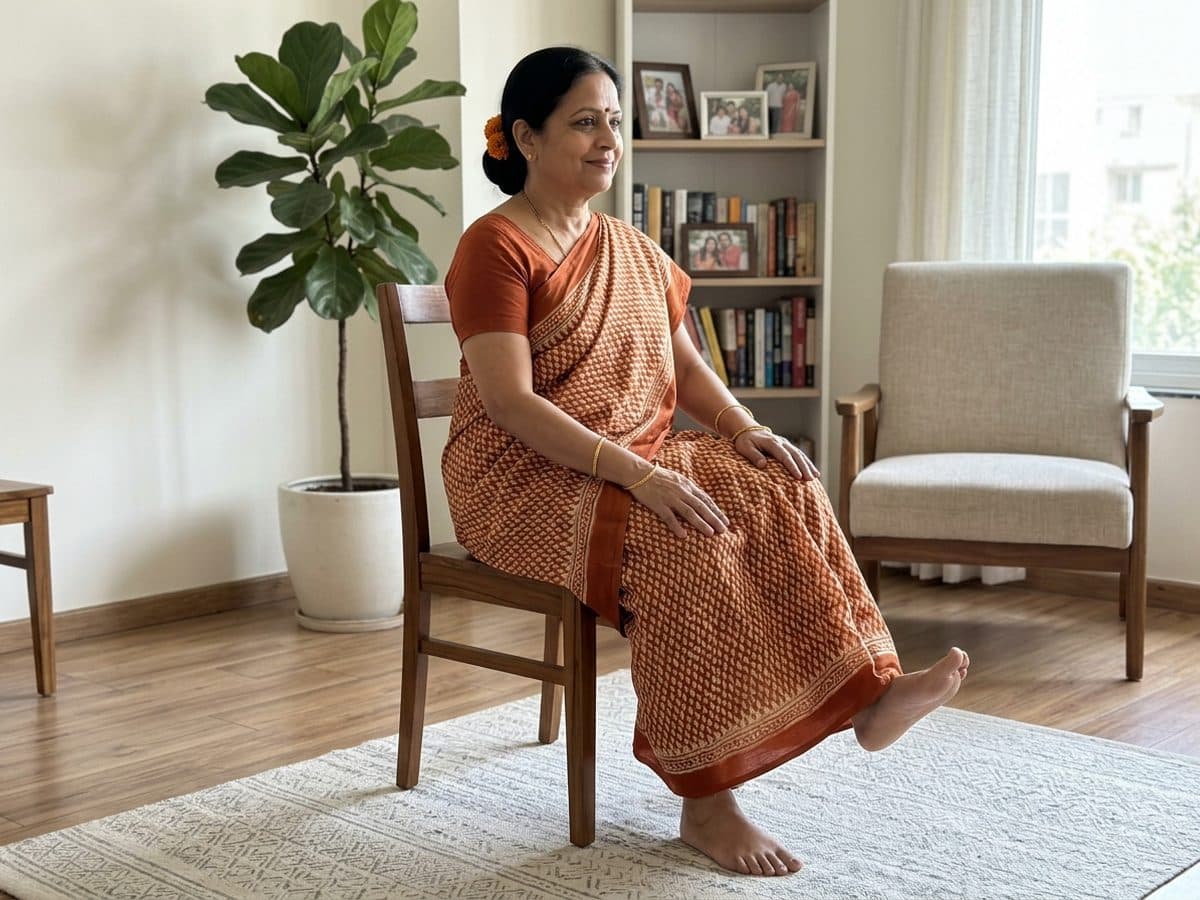
An indoor aerobic option that keeps the heart working on days when walking outside is not possible.
- Sit tall on a chair, feet flat, hands on thighs.
- Lift one knee then the other in a slow walking rhythm.
- Add gentle arm swings for more effort.
How much: 3 minutes, rest, repeat 3 times
Stop if: Keep breathing evenly. Slow down or stop if you feel light-headed.
Exercise 3
Wall sit (short holds)
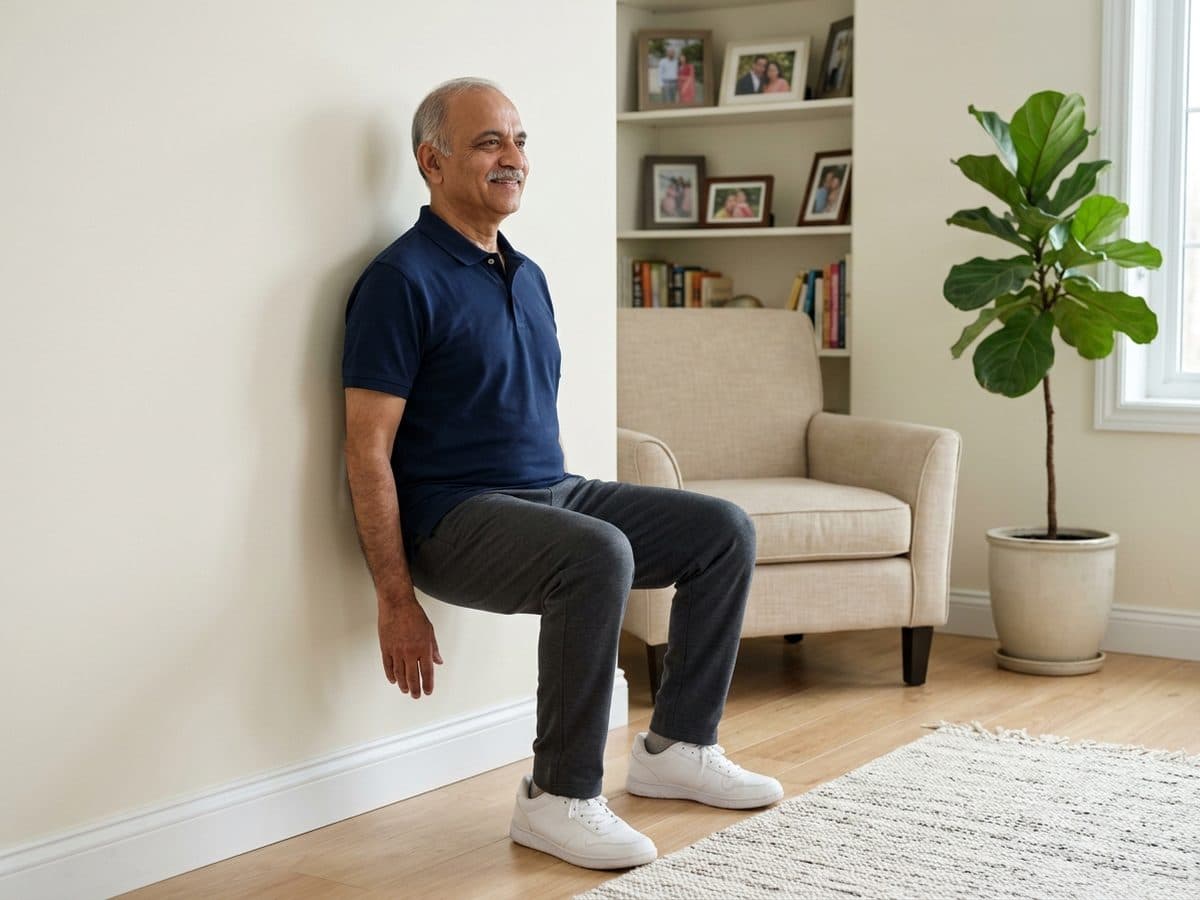
The isometric exercise with the best evidence for lowering BP. The thighs stay tight without moving.
- Stand with your back against a wall and walk the feet forward about a foot.
- Slide down the wall until the knees are bent only a little, well short of a full squat.
- Hold, breathing normally, then push back up and rest.
How much: 4 holds of 20 to 30 seconds, with 1 to 2 minutes rest between
Easier version: Hold for 10 seconds with the knees barely bent.
Stop if: Do not hold your breath. Keep the knees above the ankles and the bend shallow. Stop if you feel knee pain, or if your face feels hot or your head throbs.
Exercise 4
Handgrip squeeze

Squeezing a soft ball or rolled towel at a light effort is a proven isometric exercise for BP, and it can be done while watching TV.
- Hold a rolled towel, soft ball or stress ball in one hand.
- Squeeze at about a third of your full strength, so the hand is working but not shaking.
- Hold for up to 2 minutes, rest for 1 minute, then swap hands.
How much: 4 holds of 2 minutes (2 each hand), 3 days a week
Easier version: Hold for 30 seconds at a time and build up over two weeks.
Stop if: Breathe normally throughout. Squeeze gently; a hard grip raises BP during the hold. Skip if you have hand arthritis that flares.
Exercise 5
Sit-to-stand
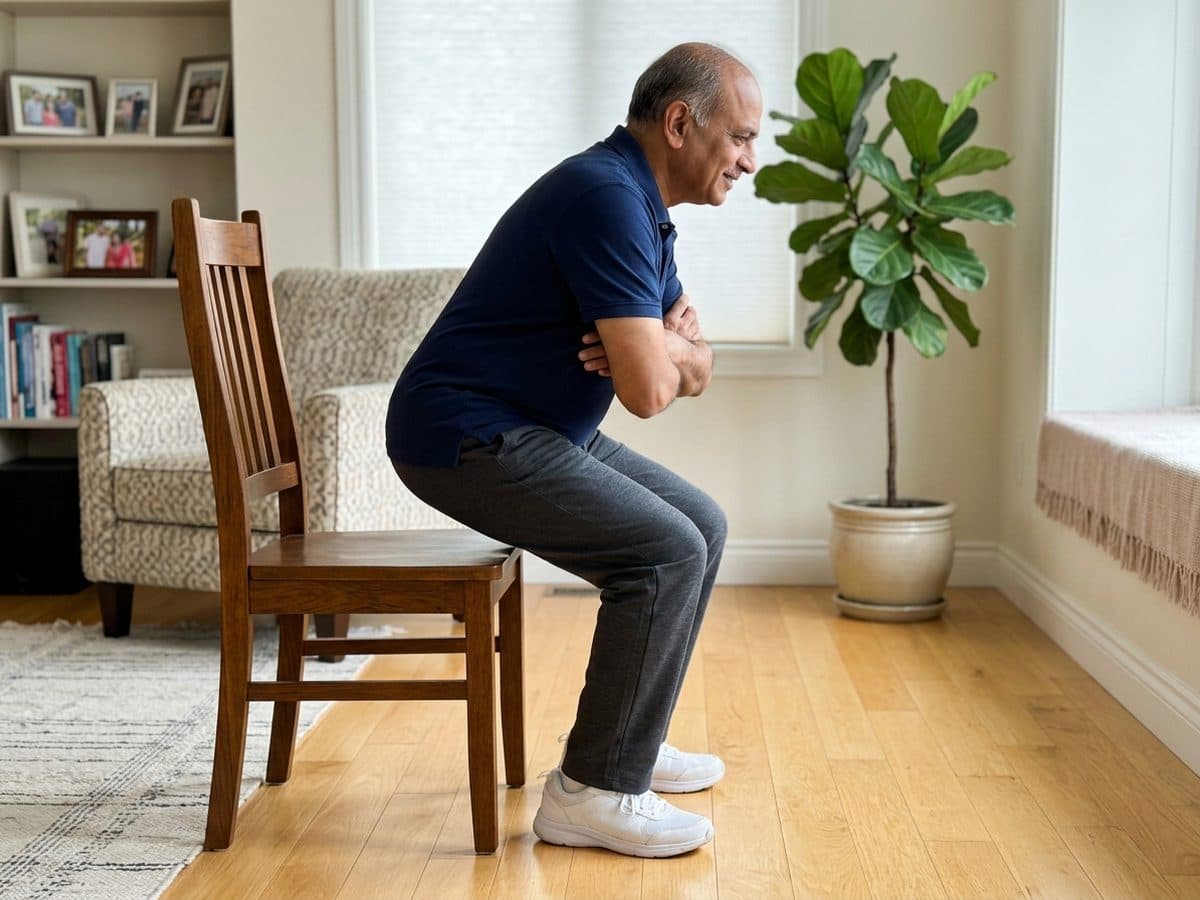
Builds the leg strength that makes every walk easier and supports long-term BP control.
- Sit on the front half of a firm chair, feet flat and slightly behind the knees.
- Breathe out and stand up, pushing through the heels.
- Sit back down slowly over 3 seconds.
How much: 8–10 repetitions, 2 rounds
Easier version: Use a higher chair or a cushion, and use your hands on your thighs.
Stop if: Breathe out on the way up, in on the way down. Never strain. Pause for a moment at standing so the head does not spin.
Exercise 6
Wall push-ups
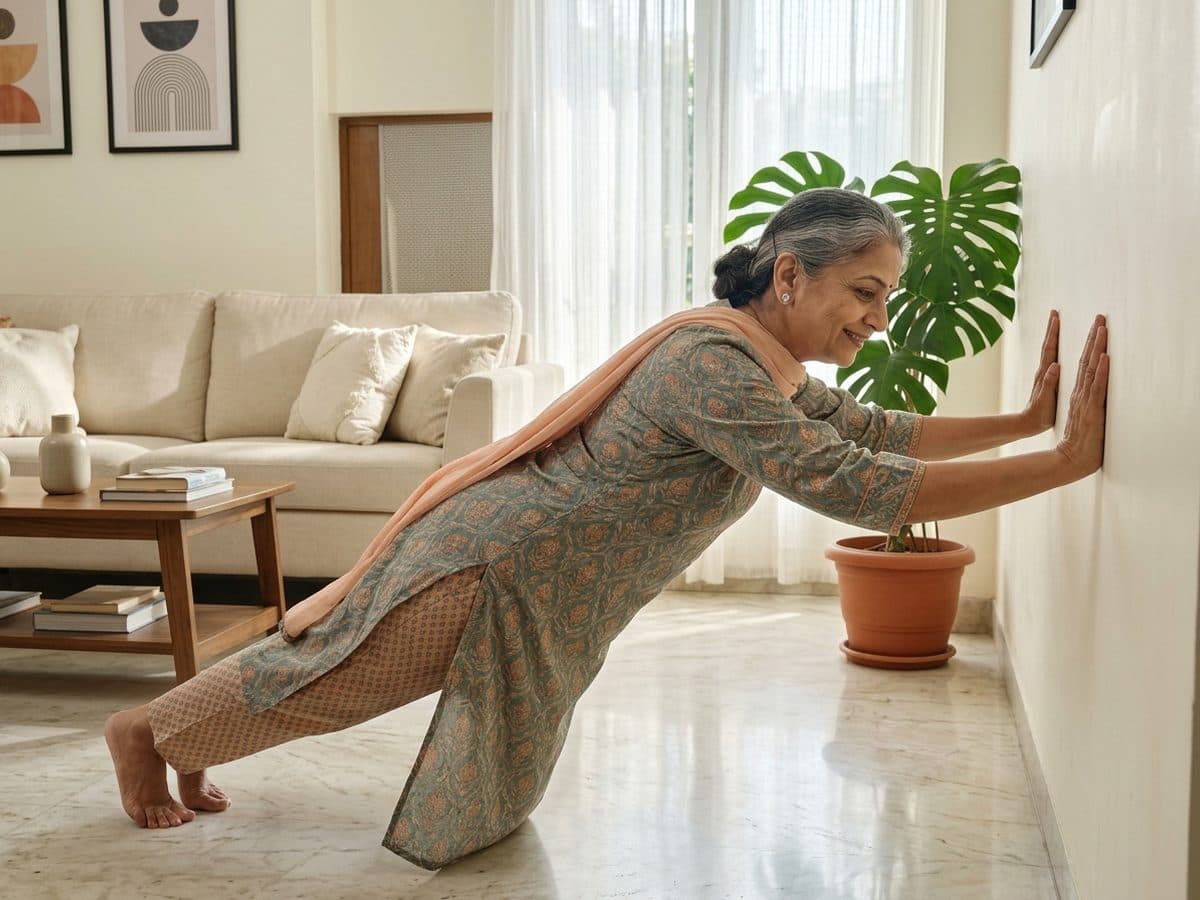
Upper body strength without the breath-holding that floor push-ups tend to cause.
- Stand an arm's length from a wall with palms on it at shoulder height.
- Bend the elbows and bring the chest towards the wall.
- Breathe out and push back slowly.
How much: 10 repetitions, 2 rounds
Easier version: Stand closer to the wall.
Stop if: Keep breathing. Stop for wrist or shoulder pain.
Exercise 7
Standing hip abduction
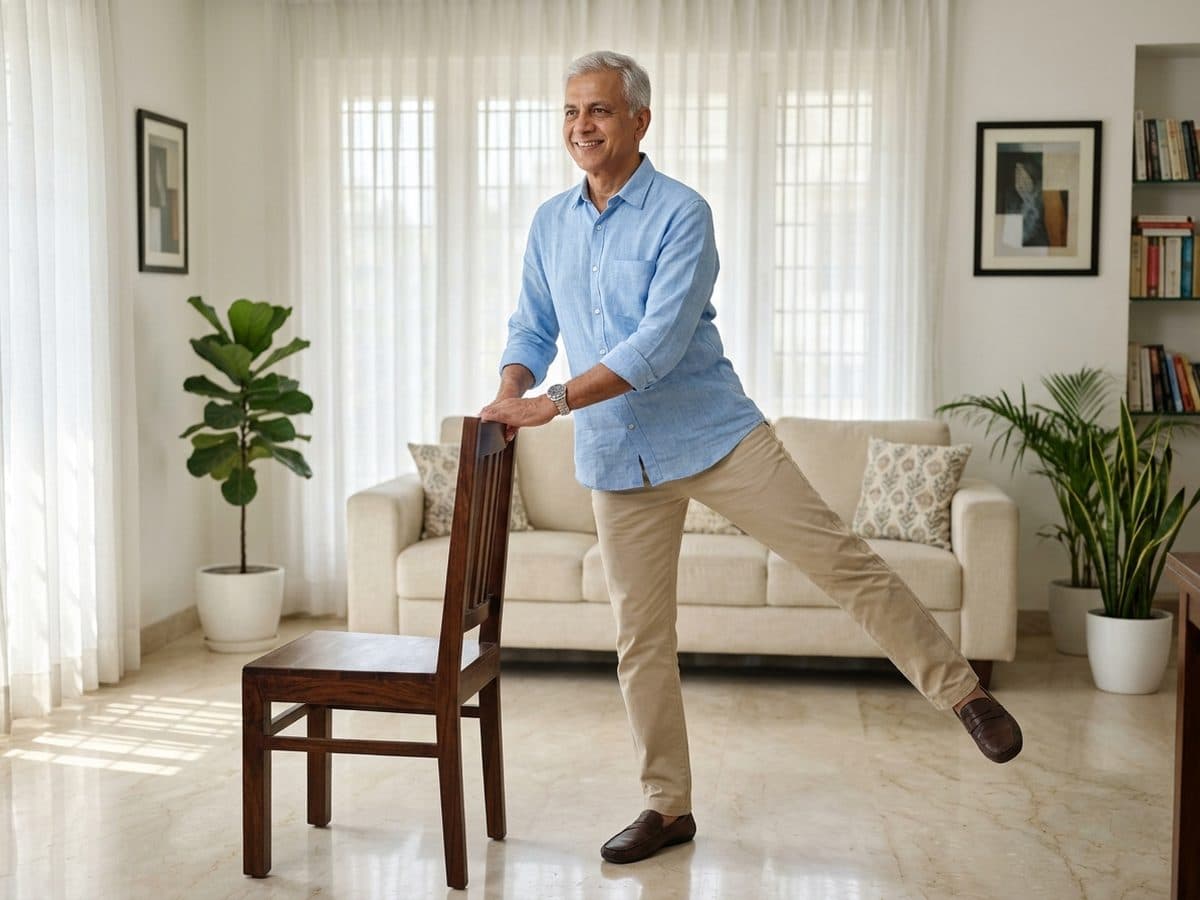
Strengthens the outer hips for steadier walking, done standing so there is no head-down position.
- Stand tall holding the back of a chair.
- Lift one leg out to the side, toes pointing forward, body upright.
- Lower slowly and repeat, then swap sides.
How much: 10 repetitions each side
Stop if: Do not lean the trunk to lift higher. Keep breathing evenly.
Exercise 8
Slow breathing practice
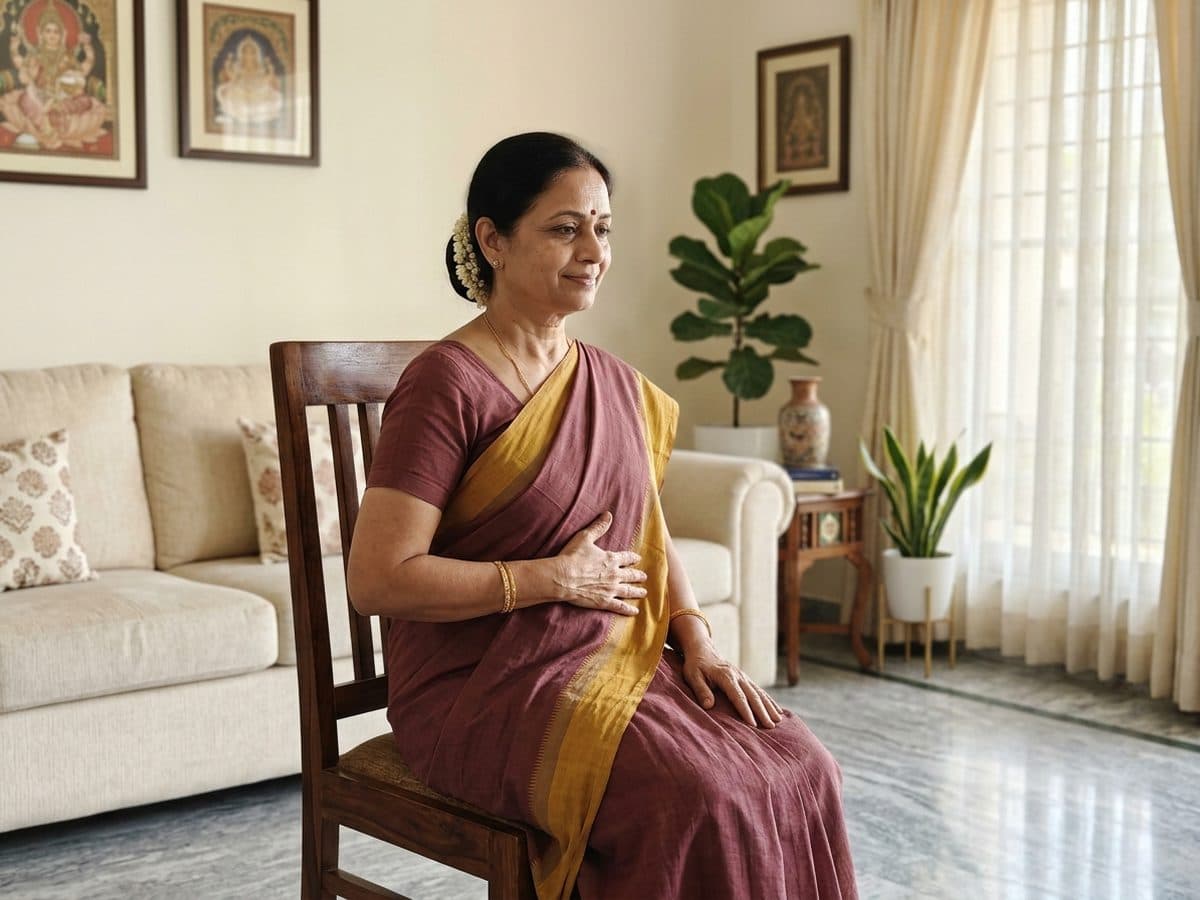
Breathing at about six breaths a minute settles the nervous system and lowers BP for a while after each session.
- Sit comfortably with the back supported and one hand on the belly.
- Breathe in through the nose for a count of 4, feeling the belly rise.
- Breathe out slowly through the nose or pursed lips for a count of 6.
How much: 5 to 10 minutes, once or twice a day
Stop if: Never force or hold the breath. If you feel dizzy, return to normal breathing.
See a doctor before exercising if
- Blood pressure above 180/110 at rest. Do not exercise; contact your doctor the same day.
- Chest pain, pressure or tightness, with or without pain in the arm, jaw or back.
- Severe headache, sudden vision change, weakness on one side, slurred speech or confusion. Call for emergency help.
- Breathlessness that is out of proportion to the effort, or that does not settle with a few minutes of rest.
- Fainting or near-fainting, especially on standing up.
A weekly plan for blood pressure1 min read
Blood pressure responds to regular, moderate effort rather than to occasional hard sessions. The plan below takes 30 to 40 minutes a day and mixes the four types of exercise above. Warm up and cool down for longer than you think you need; five minutes of slow walking at each end is the minimum after 55.
- Every day: a 30 minute brisk walk, or two or three shorter walks, with a slow start and finish.
- Monday, Wednesday, Friday: wall sits and handgrip squeezes after the walk, then the strength set (sit-to-stand, wall push-ups, hip abduction), 2 rounds each.
- Every evening: 5 to 10 minutes of slow breathing.
- Measure BP at the same time each morning, seated, after 5 minutes of rest, and write it down. Do not measure straight after exercise; the number will be high and misleading.
- Take the log to your doctor. A steady fall in resting BP sometimes means medicine can be adjusted, and only the doctor should do that.
What numbers to expect1 min read
With regular aerobic exercise kept up for two to three months, studies typically show resting systolic BP (the top number) falling by around 5 to 8 mmHg, and the bottom number by a little less. Some studies of isometric training, especially wall sits and handgrip holds done a few times a week, report larger drops, though results vary and the research is still catching up. The reduction is greatest in people whose BP is highest to begin with.
These are averages. Some people see more, some less, and the effect fades within a few weeks if exercise stops. Think of it as a daily medicine that has to be taken to keep working.
Medicines and exercise1 min read
Most BP medicines and exercise get along well, but a few need care. Beta-blockers slow the heart, so the pulse is not a reliable guide to effort; use the talk test instead. Diuretics (water tablets) can lower potassium and cause cramps or dizziness in hot weather, so drink water and avoid the midday sun. Many BP medicines cause a dip in pressure on standing, so always stand up slowly and pause before walking off.
Never stop or change a BP medicine because exercise is going well. Tell your doctor about the exercise plan and share your readings, and let the doctor decide.
Blood pressure in a live Omfit class1 min read
The exercises that lower blood pressure are simple. The mistakes that make them unsafe are also simple, and they are hard to notice on your own: holding the breath during a wall sit or a sit-to-stand, standing up too fast after floor work, and pushing to a hard effort when a moderate one would do more good. A coach watching nine faces on Zoom catches all three within seconds.
Omfit classes run three times a week with the same certified coach, who has read every member's health form before the first session. Parents on BP medicine are cued to breathe out on every effort, given longer warm-ups and cool-downs, and reminded to measure BP in the morning rather than after class. On the days between, walking targets and breathing routines go out on WhatsApp, so the daily part of the plan happens too.
Live classes for parents 55+
Get this done live, three times a week
Omfit's coaches run these progressions on Zoom for batches of nine parents. Health history reviewed before day one, every movement corrected as it happens, updates sent to the family.
12 live sessions · batch of 9 · 7-day refund · no auto-debit
Common questions1 min read
Which exercise lowers blood pressure the fastest?+
No exercise lowers resting BP overnight, but a single session of brisk walking or slow breathing lowers pressure for a few hours afterwards. For lasting change, the strongest results in studies come from isometric holds such as wall sits and handgrip squeezes done a few times a week, alongside daily walking.
Is it safe to exercise with high blood pressure?+
For most people, yes, and it is recommended. If your resting BP is above 180/110, or you have chest pain, breathlessness or dizziness, do not exercise until your doctor has seen you. Everyone with high BP should avoid holding the breath and should warm up and cool down slowly.
How much can exercise reduce blood pressure?+
Regular aerobic exercise for two to three months typically lowers systolic BP by around 5 to 8 mmHg. Isometric exercise may lower it by more in some studies. The effect is greater for people with higher starting pressure, and it disappears within weeks if exercise stops.
Should I take my BP medicine before or after exercise?+
Take it at the time your doctor prescribed and keep that time the same every day. Do not skip a dose to exercise, and do not take extra. If you feel dizzy when standing after exercise, tell your doctor; the dose or timing may need adjusting.
Is weight lifting bad for blood pressure?+
Heavy lifting with a held breath raises BP sharply during the lift and is best avoided. Light to moderate strength training with normal breathing, such as sit-to-stands, wall push-ups and water-bottle exercises, is safe for most people with high BP and helps control it over time.