Exercise for diabetes: what to do, how much, and how to stay safe
For type 2 diabetes, the evidence points to three kinds of exercise done together: aerobic activity like walking for about 150 minutes a week, strength work two or three times a week, and a little balance and flexibility work as you get older. Done regularly, this combination lowers HbA1c, blood pressure and weight, and it can reduce the amount of medicine some people need.
By the Omfit coaching team · Updated 12 September 2026 · 9 min read
Exercise is not an optional extra in diabetes care. It is a treatment in its own right, and one of the few that improves sugar, blood pressure, cholesterol, weight and mood at the same time. Every diabetes guideline asks for it, and every one gives roughly the same prescription: move most days, lift something a few times a week, and do not let more than two days pass without activity.
After 55 the strength part matters more than it did at 40. Muscle is the body's main store for glucose, and it shrinks by roughly a third between 50 and 80 unless it is used. The plan below keeps the moves simple enough to do in the living room, with a chair for support and water bottles for weight. The safety rules around feet, sugar checks and medicine timing are just as important as the exercises, so please read them before starting.
Why exercise works for diabetes1 min read
- Moving muscles take in glucose from the blood without needing insulin, and the effect lasts for up to 24 hours after a session. This is why the guidelines say no more than two days off in a row.
- Over weeks, regular exercise makes the body more sensitive to its own insulin, so the same amount does more work.
- Strength training adds muscle, which means more storage for glucose after every meal, and it protects bone and balance.
- Aerobic exercise brings down blood pressure and improves cholesterol, and heart disease is the biggest risk for anyone with diabetes.
The exercises3 min read
Exercise 1
Brisk walking

The core aerobic exercise. Cheap, safe and easy to measure.
- Put on proper closed shoes with socks, and check your feet first.
- Walk at a pace where you can still talk but could not sing.
- Aim for 20 to 30 minutes, either in one go or as three post-meal walks.
How much: 150 minutes a week, spread over at least 5 days
Easier version: Start with 10 minutes at a time and add 5 minutes every week.
Stop if: Carry something sweet and your phone. Stop for chest pain, dizziness or shakiness. Check your feet afterwards for blisters or redness.
Exercise 2
Seated march

Aerobic work from a chair, for days when walking outside is not possible or the feet need rest.
- Sit tall with the back away from the backrest and hands on the thighs.
- Lift one knee, then the other, at a steady walking rhythm.
- Swing the arms gently for a little more effort.
How much: 3 minutes, rest, repeat 3 times
Stop if: Keep the feet landing softly. Slow down if you become breathless.
Exercise 3
Sit-to-stand
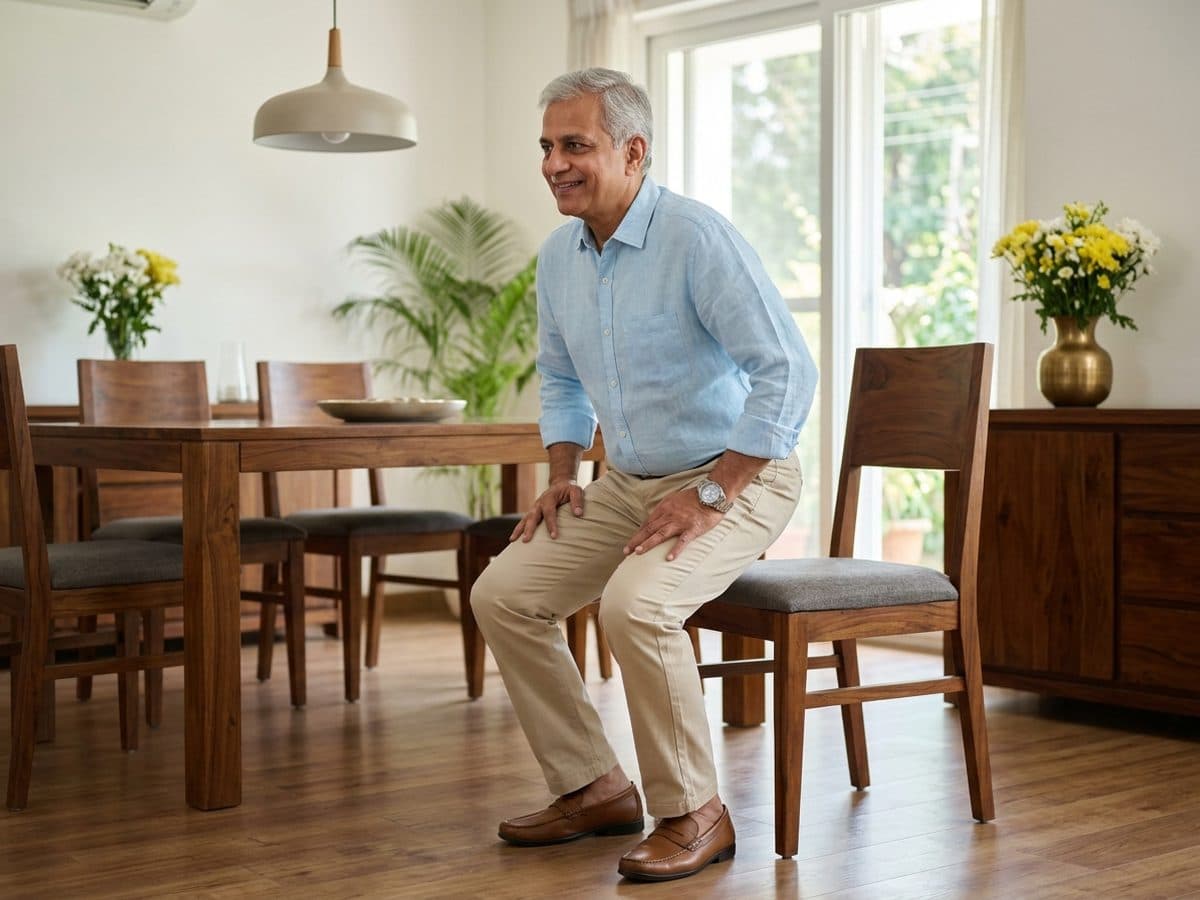
The best home strength exercise for the thighs and hips, the muscles that store the most glucose.
- Sit on the front half of a firm chair, feet flat and slightly behind the knees.
- Stand up by pushing through the heels, using your hands on your thighs if needed.
- Sit back down slowly over 3 seconds.
How much: 8–12 repetitions, 2 rounds
Easier version: Use a higher chair or put a cushion on the seat.
Stop if: Breathe out as you stand up; never hold your breath. Stop for knee pain or dizziness.
Exercise 4
Wall push-ups
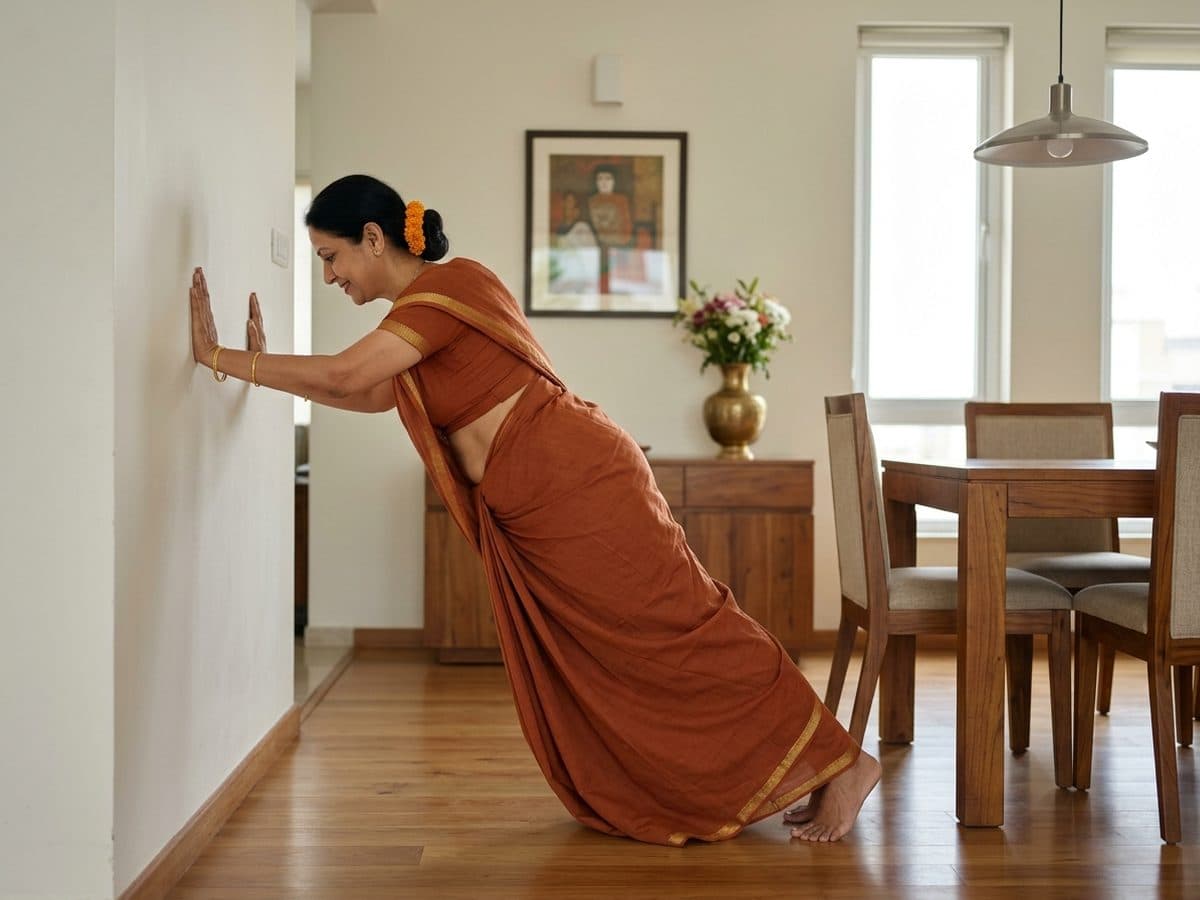
Chest, shoulders and arms, with no need to get on the floor.
- Stand an arm's length from a wall with palms on it at shoulder height.
- Bend the elbows and lower the chest towards the wall, body in a straight line.
- Push back to the start slowly.
How much: 10–12 repetitions, 2 rounds
Easier version: Stand closer to the wall.
Stop if: Breathe out as you push. Stop for wrist or shoulder pain.
Exercise 5
Water-bottle bicep curl and overhead press
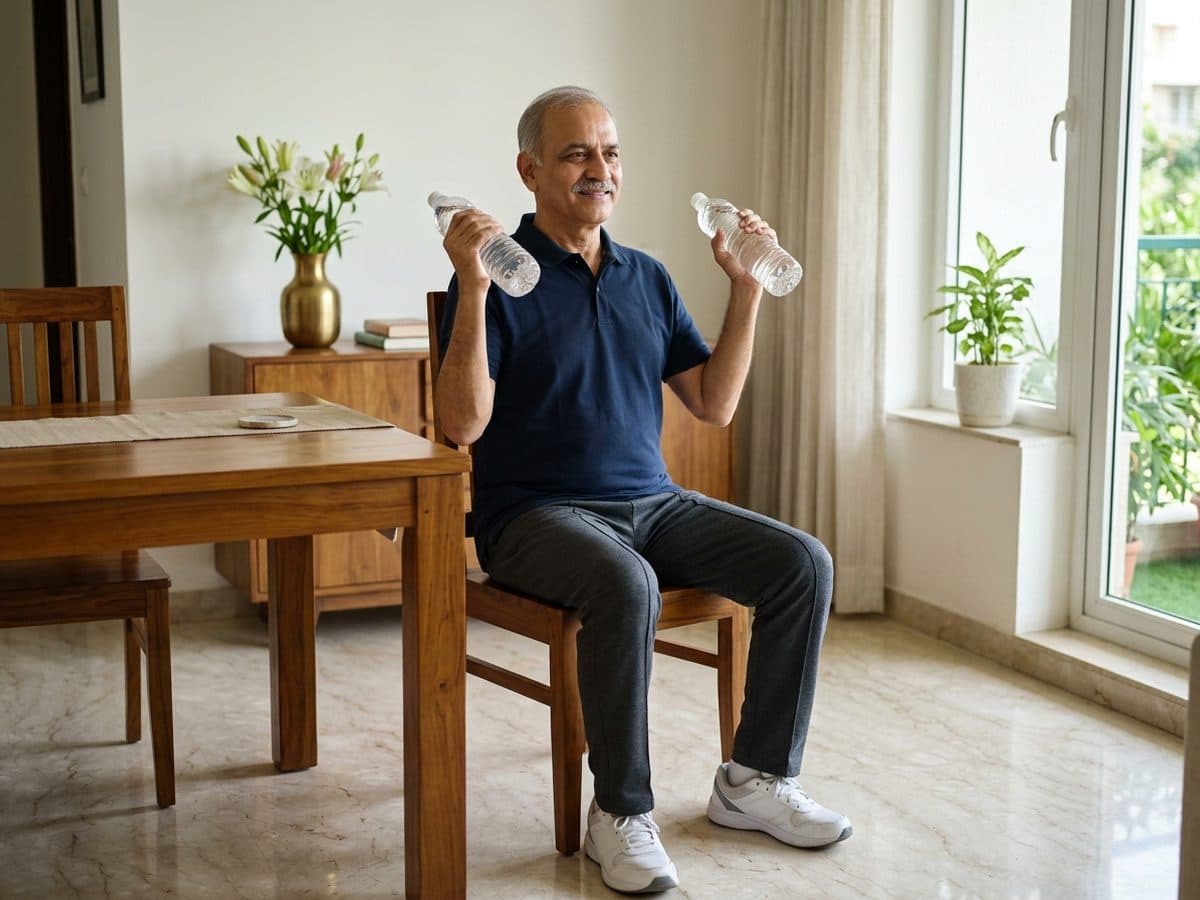
Arm and shoulder strength with something everyone has at home.
- Sit or stand holding a filled 1 litre water bottle in each hand, arms by your side.
- Curl the bottles up to the shoulders, then press them overhead until the arms are nearly straight.
- Lower back to the shoulders, then down to the sides, slowly.
How much: 10 repetitions, 2 rounds
Easier version: Use half-filled bottles, or do only the curl.
Stop if: Skip the overhead part if you have shoulder pain or advanced eye disease (retinopathy). Never strain or hold your breath.
Exercise 6
Standing calf raise
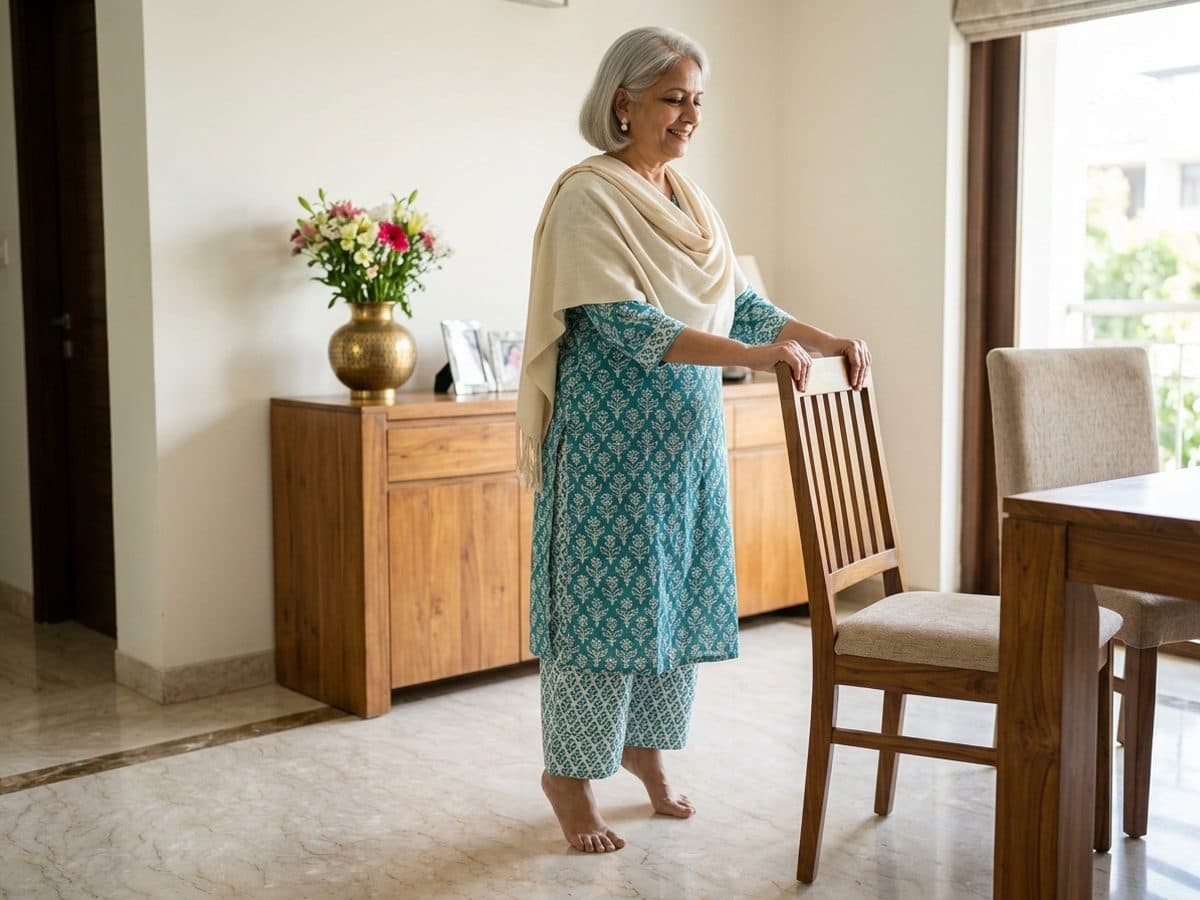
Calf muscles help push blood back up from the legs and take glucose from the blood during walking.
- Stand holding the back of a chair, feet hip-width apart.
- Rise onto the balls of the feet, hold for a second, then lower over 3 seconds.
How much: 12–15 repetitions, 2 rounds
Easier version: Do it seated, lifting the heels with toes on the floor.
Stop if: If the feet are numb, do this in shoes and check the soles afterwards. Stop for calf cramp.
Exercise 7
Glute bridge
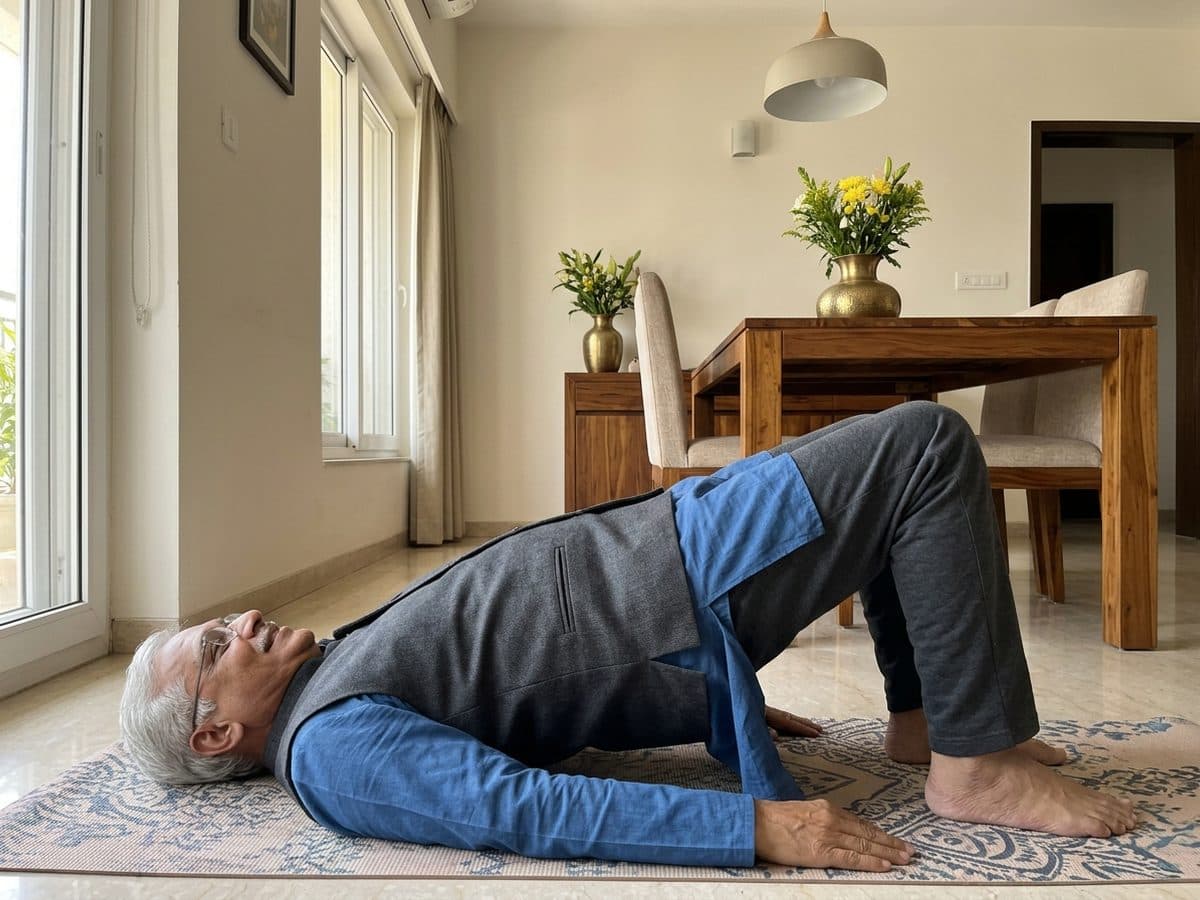
Buttocks and back of the thigh, done lying down so there is no load on the knees or feet.
- Lie on your back on a mat or bed with knees bent and feet flat.
- Squeeze the buttocks and lift the hips until the body is a straight line from shoulders to knees.
- Hold for 3 seconds, then lower slowly.
How much: 10 repetitions, 2 rounds
Easier version: Lift the hips only a few centimetres.
Stop if: Skip if you cannot get down to and up from the floor comfortably; do it on the bed instead.
Exercise 8
Heel-to-toe standing and single-leg stand

Balance training. Diabetes can dull the feeling in the feet, which makes falls more likely.
- Stand beside a wall or a chair and hold on lightly.
- Place one foot directly in front of the other, heel touching toe, and hold for 10 to 20 seconds.
- Then stand on one leg for 10 seconds, holding the chair, and swap.
How much: 3 holds each position
Stop if: Always have something to hold. Do this with someone nearby if your balance is poor.
See a doctor before exercising if
- Sugar below 70 mg/dL, or symptoms of a low: shaking, sweating, confusion, sudden hunger. Take 15 grams of sugar and rest; do not exercise.
- Sugar above 300 mg/dL, or above 250 mg/dL with ketones in urine or feeling unwell.
- Chest pain, pressure, or breathlessness out of proportion to the effort.
- A sore, blister or cut on the foot. With numb feet, look at them every day and after every walk.
- Sudden change in vision, or a severe headache during exercise.
A weekly plan for type 2 diabetes1 min read
The plan below matches what the guidelines ask for: about 150 minutes of moderate aerobic activity, strength work on 2 or 3 non-consecutive days, and never more than two days in a row without some activity. It fits in roughly 30 to 40 minutes a day.
- Monday, Wednesday, Friday: 15 minute walk, then the strength set (sit-to-stand, wall push-ups, bottle curl and press, calf raise, glute bridge), 2 rounds each. Finish with balance holds.
- Tuesday, Thursday, Saturday: 30 minutes of walking, as one walk or three post-meal walks. Seated march if you cannot go out.
- Sunday: rest, or a relaxed 15 minute walk.
- Every day: 10 minute walk after the biggest meal, even on strength days.
- After 4 weeks, add a third round to the strength exercises or fill the bottles fuller.
Exercising with complications1 min read
Diabetes that has affected the nerves, eyes or kidneys does not rule out exercise. It changes what to choose. Ask your doctor which of these applies to you, and tell your coach or physiotherapist.
- Nerve damage in the feet (neuropathy): wear cushioned closed shoes and socks even indoors, avoid long walks on hard ground, prefer seated march, cycling or water exercise for aerobic work, and inspect the feet daily.
- Eye disease (retinopathy): avoid heavy straining, breath-holding, lifting heavy weights overhead, and head-below-heart positions. Walking, seated exercise and light weights with normal breathing are usually fine, but get the eye doctor's clearance first.
- Kidney disease: exercise is still recommended and helps blood pressure. Keep the intensity moderate, drink water, and let the kidney doctor know your plan, especially if you are on dialysis.
- Heart disease or a history of stents or bypass: start only after your cardiologist agrees, and begin with short walks and seated exercise.
What results to expect1 min read
In studies of adults with type 2 diabetes, a structured exercise programme kept up for a few months typically lowers HbA1c by around 0.5 to 0.7 percentage points, which is similar to adding a tablet. The biggest drops come from combining aerobic and strength training rather than either alone. Blood pressure usually falls by a few points, and waist size shrinks before body weight does.
Individual results vary a lot, and they depend on starting fitness, medicine, sleep and food. Keep a simple log of sugar readings and walks, and take it to your doctor. A good response to exercise sometimes means medicine can be reduced, and only the doctor should make that call.
Diabetes in a live Omfit class1 min read
A large share of Omfit members manage diabetes. Their health forms are read before day one, so the coach knows who is on insulin, who has numb feet and who has had eye treatment. Those members get their modifications set in advance: no overhead pressing for retinopathy, seated march instead of step-ups for neuropathy, and a reminder to check sugar before class for anyone on insulin.
Classes run three times a week with the same coach and the same nine parents, which takes care of the "no more than two days off" rule without anyone counting. Between classes, walking targets go out on WhatsApp, and expert sessions with a nutritionist and doctor cover the food side that this page deliberately leaves to professionals.
Live classes for parents 55+
Get this done live, three times a week
Omfit's coaches run these progressions on Zoom for batches of nine parents. Health history reviewed before day one, every movement corrected as it happens, updates sent to the family.
12 live sessions · batch of 9 · 7-day refund · no auto-debit
Common questions1 min read
What is the best exercise for diabetes?+
There is no single best exercise. The strongest results come from combining aerobic activity such as brisk walking with strength training such as sit-to-stands and wall push-ups. If you can only do one, start with a daily walk after meals and add strength work within a few weeks.
How much exercise does a diabetic need per week?+
Guidelines recommend about 150 minutes a week of moderate aerobic activity, spread over at least five days, plus strength training on two or three non-consecutive days. Try never to go more than two days without activity, because the sugar-lowering effect of a session fades within a day or two.
Should I check my sugar before exercising?+
If you take insulin or sulfonylurea tablets, yes. Below 100 mg/dL, have a small snack first. Above 300 mg/dL, or above 250 with ketones, do not exercise and call your doctor. If you are on metformin alone, routine checks before exercise are usually not needed, but check if you feel unwell.
When is the best time to exercise for blood sugar?+
After meals. A walk begun within 30 minutes of eating cuts the after-meal spike. For strength training, any consistent time works; many parents prefer the morning before the day gets busy. Avoid exercising at the time your insulin peaks unless your doctor has adjusted the dose.
Can exercise reverse type 2 diabetes?+
Exercise can bring sugar and HbA1c into a healthier range and, together with weight loss, some people reach remission. That is a decision to make with your doctor over time, not by stopping medicine on your own. Keep taking prescribed medicine and let your readings guide the doctor's adjustments.