Chair yoga for senior citizens: eight poses you can do today
Chair yoga brings the stretching, breathing and calm of yoga to anyone who cannot get down to the floor or stand for long. The eight poses below need only a firm chair. They loosen the spine, hips and shoulders and settle the breath. Pair them with strength work for the full benefit.
By the Omfit coaching team · Updated 12 September 2026 · 9 min read
Many parents over 60 have been told that yoga is good for them and then found that the class expects them to sit cross-legged on the floor and get up again. Chair yoga removes that barrier. Every pose is done sitting on, or holding, an ordinary chair, so people with stiff knees, a bad back, poor balance or a recent illness can practise safely.
It is worth being clear about what chair yoga does. It improves flexibility, posture, breathing and mood, and it is a gentle way for a sedentary parent to start moving. It does not build much muscle. If the goal is stronger legs, steadier balance on stairs, or better blood sugar, chair yoga should sit alongside strength exercises rather than replace them.
What chair yoga does for a body over 601 min read
- Gentle spinal movement in all directions keeps the back and neck from stiffening, which is the main cause of that "old" feeling on waking.
- Slow breathing with movement lowers the resting heart rate and helps blood pressure over time.
- Opening the chest and shoulders corrects the rounded posture that comes from years at a desk or a phone.
- A short daily practice gives a reliable moment of calm, which many parents value as much as the physical effect.
The exercises4 min read
Exercise 1
Seated mountain pose with slow breathing
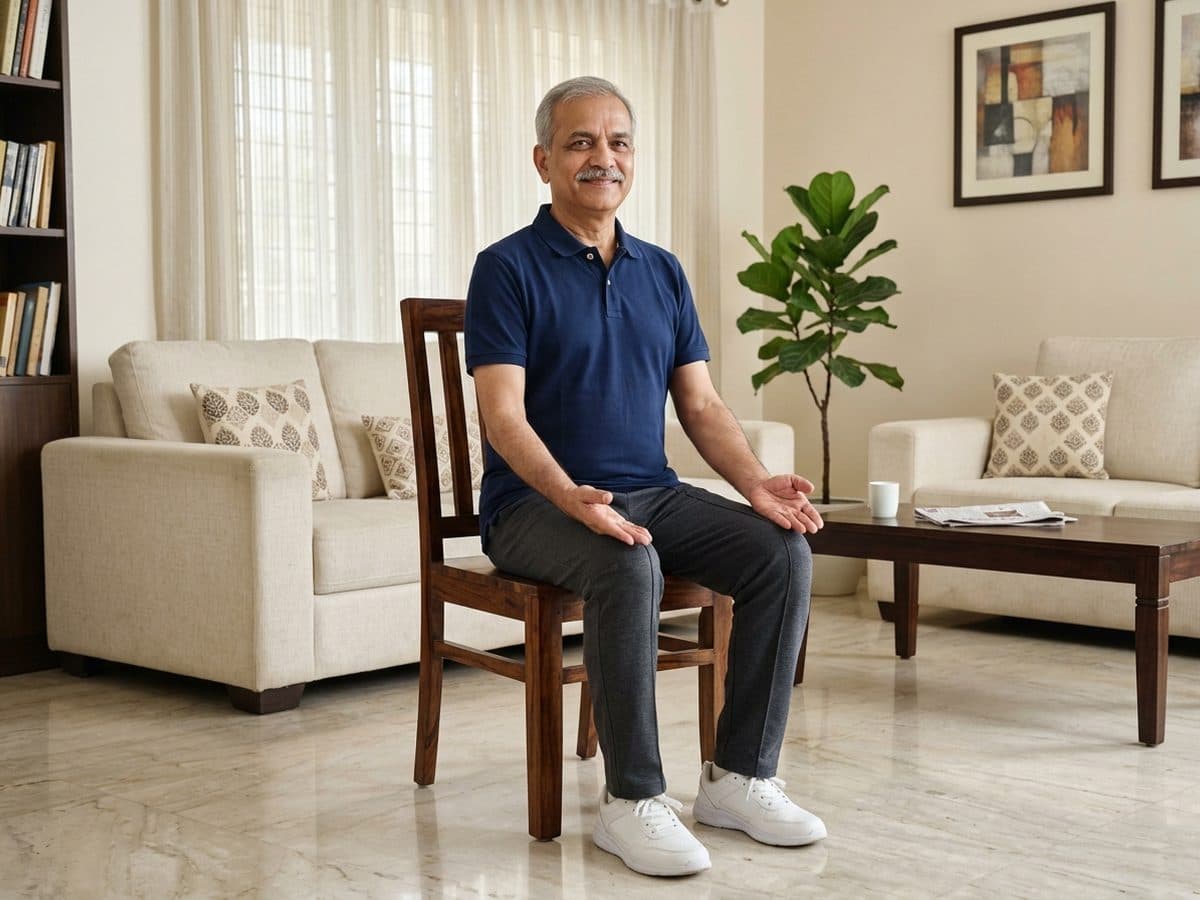
Sets up good posture and calm breathing for everything that follows.
- Sit on the front half of the chair, feet flat and hip-width apart, hands resting on the thighs.
- Lengthen the spine as if a string were lifting the crown of the head, and let the shoulders drop.
- Breathe in slowly for 4 counts through the nose, breathe out for 6 counts.
How much: 8 slow breaths
Stop if: If you feel dizzy, breathe normally for a minute before continuing. Never force the breath.
Exercise 2
Seated cat-cow
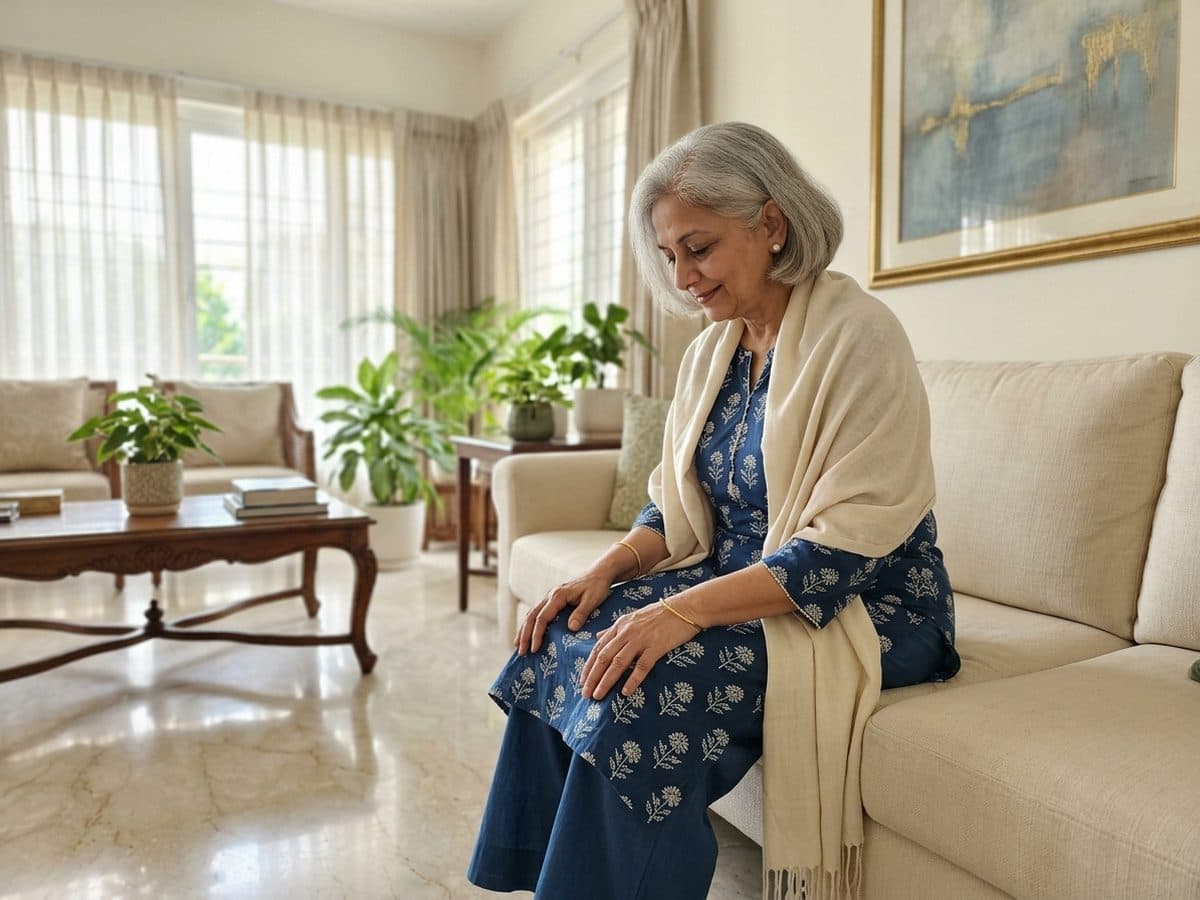
Moves the whole spine gently, easing morning stiffness in the back.
- Place your hands on your knees.
- Breathe in, lift the chest, and let the back arch gently so you look slightly upward.
- Breathe out, round the back, tuck the chin and draw the belly in.
How much: 8 rounds, moving with the breath
Easier version: Move only the upper back and keep the head still.
Stop if: Keep the movement small if you have a slipped disc or spinal stenosis. Stop if you feel tingling in the arms or legs.
Exercise 3
Seated side bend
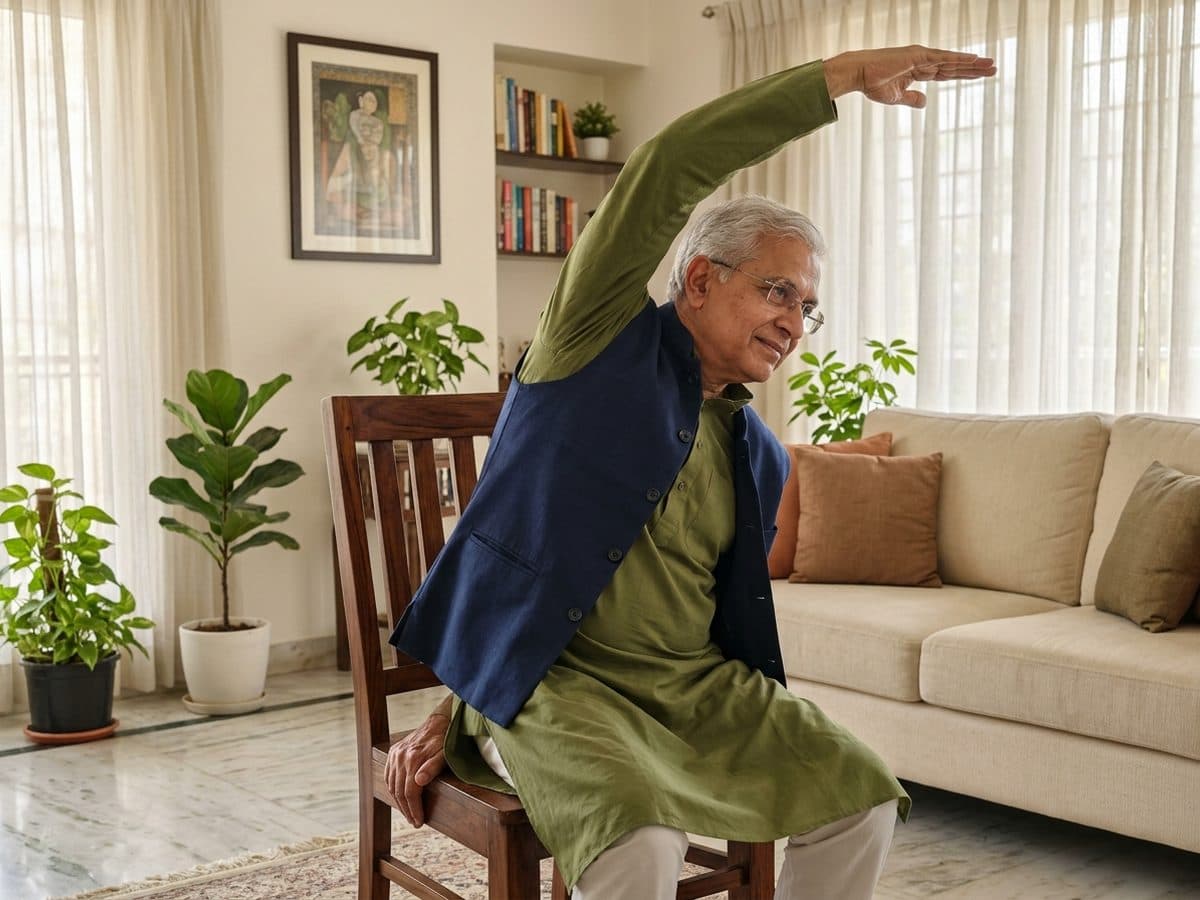
Stretches the sides of the waist and ribs, which helps breathing and eases a stiff lower back.
- Hold the side of the chair seat with the right hand.
- Breathe in and lift the left arm overhead; breathe out and lean gently to the right.
- Hold for 3 breaths, come back up, and repeat on the other side.
How much: 2 holds each side
Easier version: Keep the top hand on the shoulder instead of overhead.
Stop if: Keep both buttocks on the seat. Do not twist or lean forward.
Exercise 4
Seated spinal twist
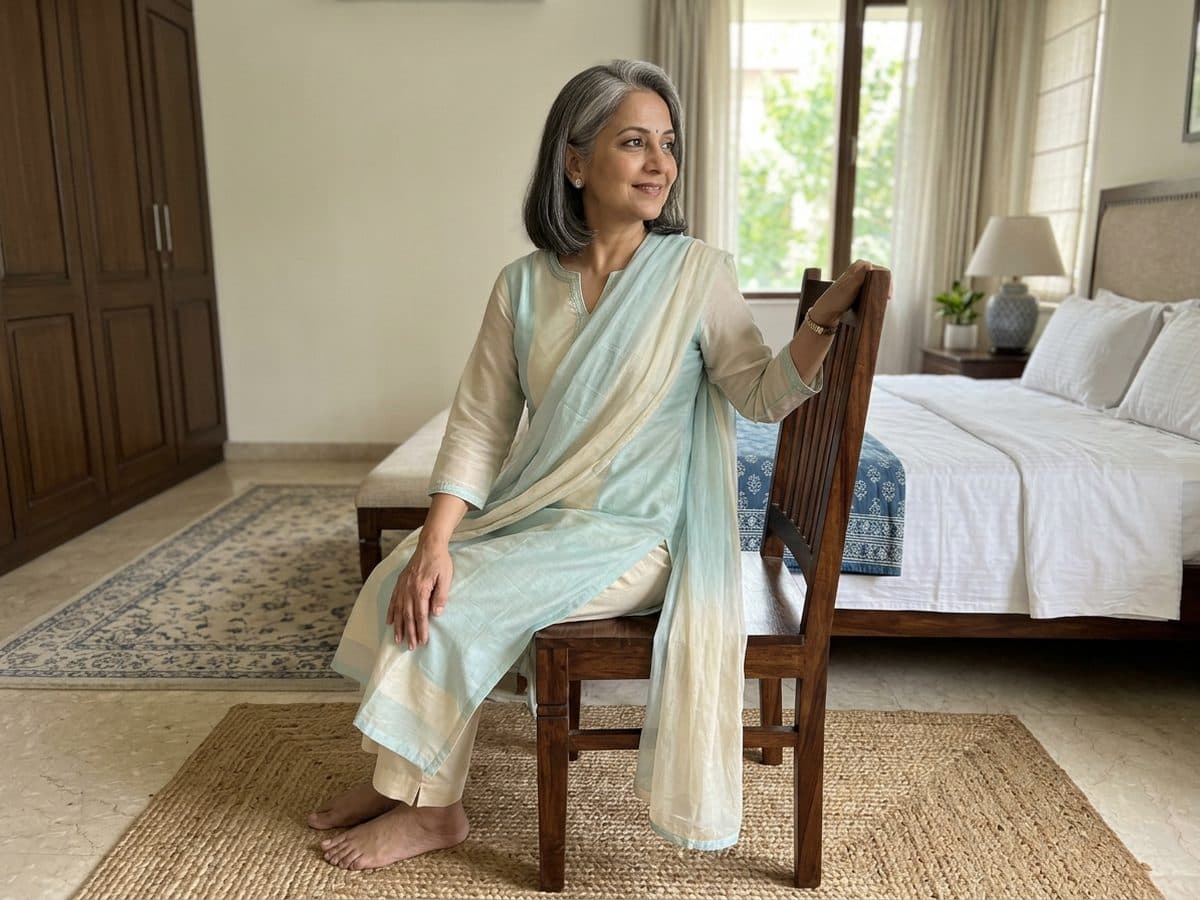
Keeps the mid-back mobile and helps with turning to look behind you, for example when crossing a road.
- Sit tall with feet flat.
- Breathe in to lengthen, then breathe out and turn the upper body to the right, placing the left hand on the right knee and the right hand on the chair back.
- Hold 3 breaths, return to centre, repeat to the left.
How much: 2 twists each side
Stop if: Turn from the chest, not the neck, and keep the hips facing forward. Twist gently if you have osteoporosis.
Exercise 5
Seated forward fold
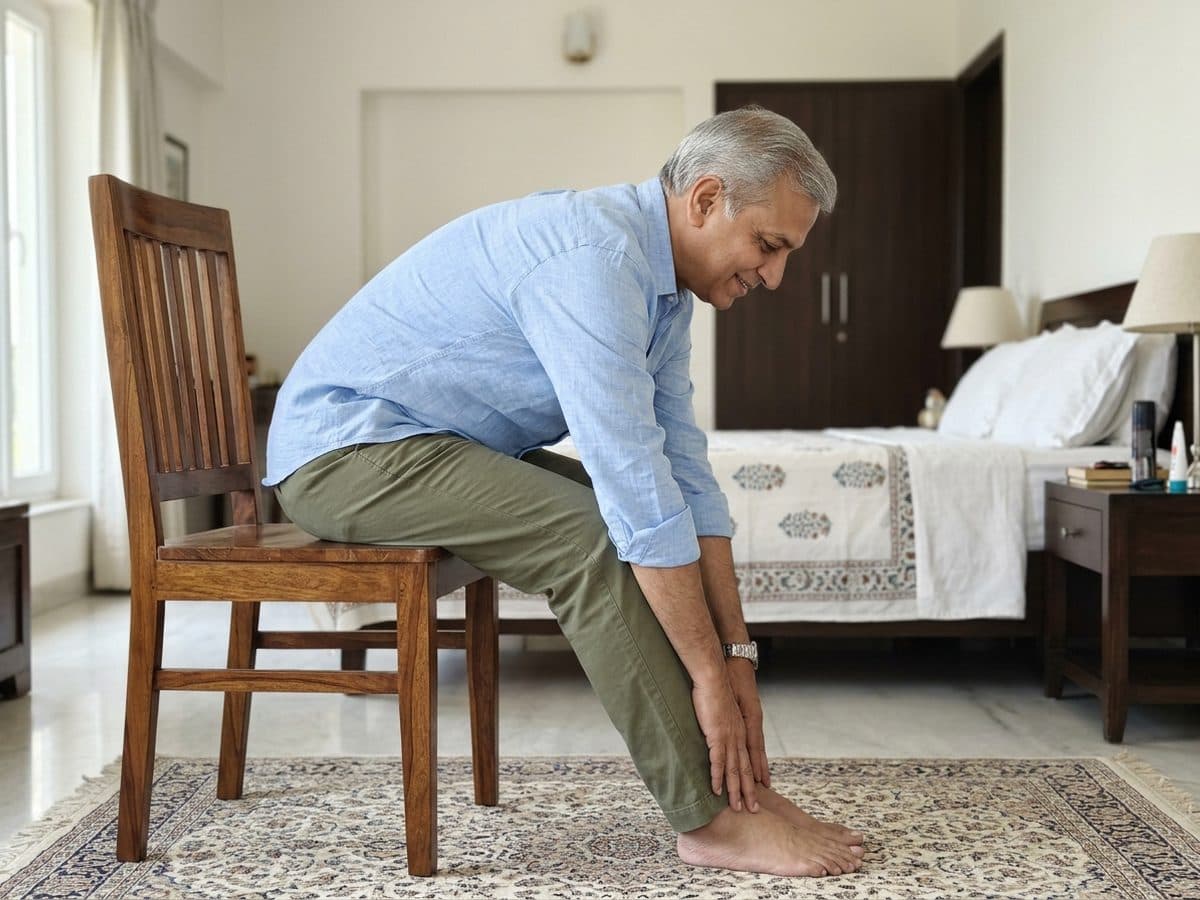
Stretches the lower back and hamstrings and calms the nervous system.
- Sit with feet slightly wider than the hips.
- Breathe out and hinge forward from the hips, sliding the hands down the legs towards the shins.
- Let the head hang, hold 3 breaths, and come up slowly using the hands on the thighs.
How much: 2 holds
Easier version: Fold only halfway and rest the forearms on the thighs.
Stop if: Skip if you have uncontrolled high blood pressure, glaucoma, or feel dizzy when bending. Come up slowly every time.
Exercise 6
Seated eagle arms
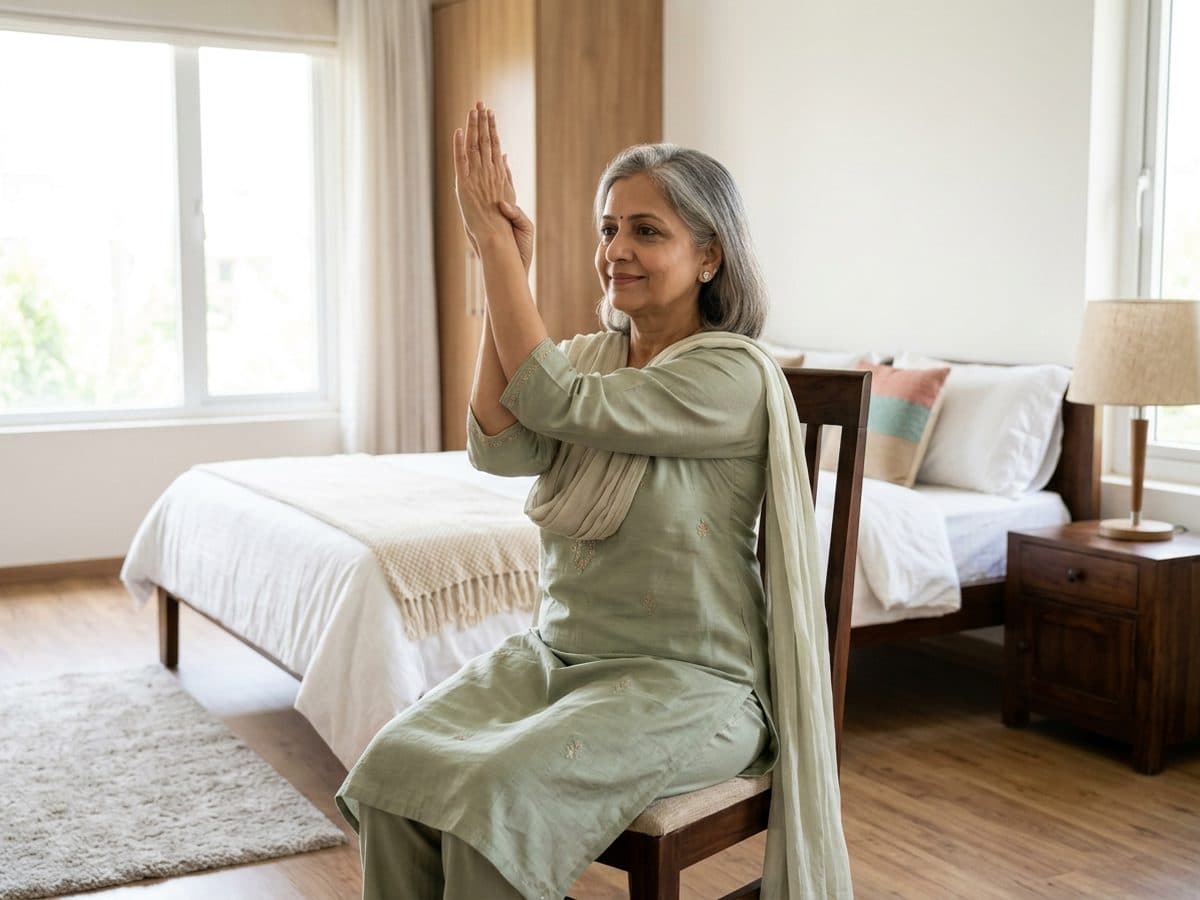
Opens the upper back and the space between the shoulder blades, which tightens with rounded posture.
- Stretch both arms forward and cross the right arm over the left at the elbow.
- Bend the elbows and bring the palms or backs of the hands together.
- Lift the elbows slightly and hold 3 breaths, then swap the cross.
How much: 2 holds each side
Stop if: If the arms do not cross fully, simply hug your own shoulders. Skip if you have a frozen shoulder that is painful at rest.
Exercise 7
Chair pigeon
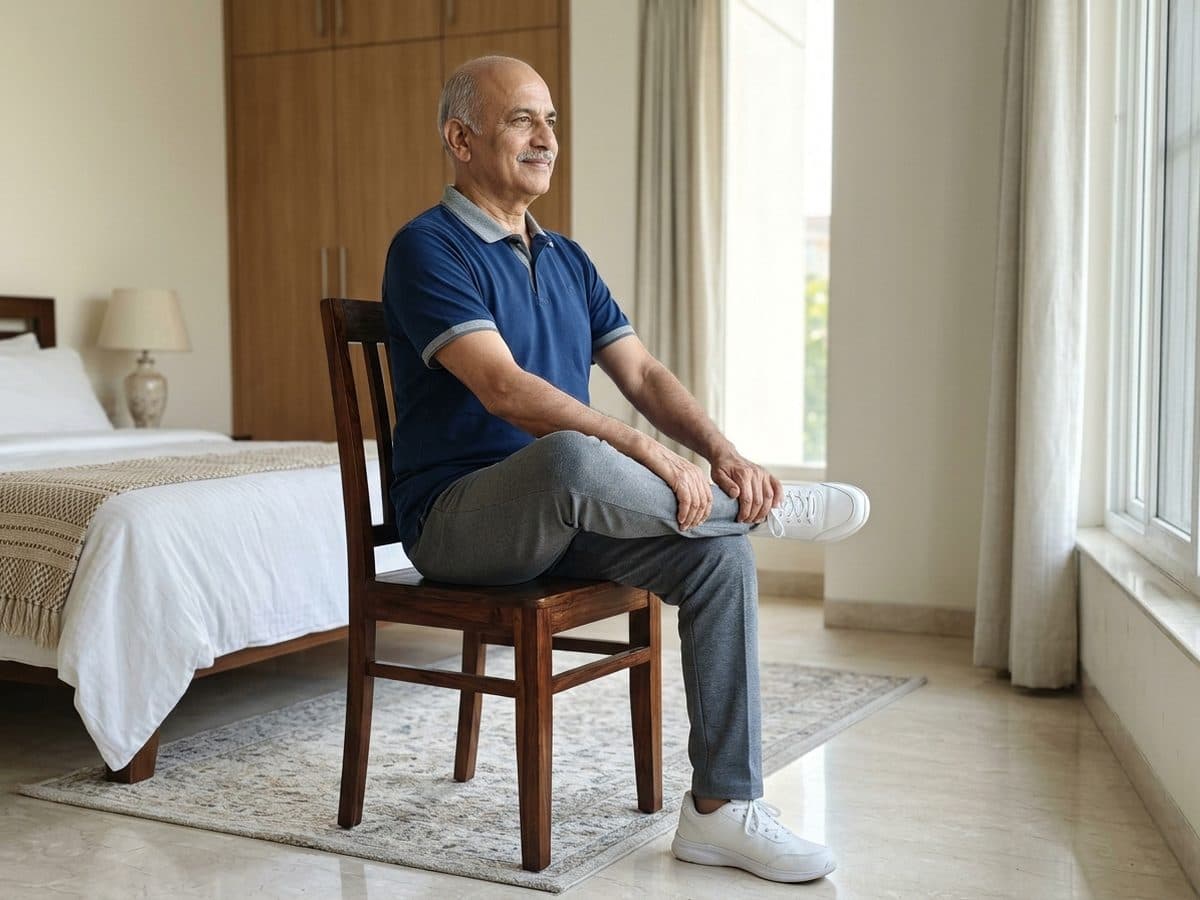
A gentle hip-opener that eases tightness in the buttock and outer hip, common after long sitting.
- Sit tall and place the right ankle on top of the left knee, foot flexed.
- Rest the hands on the right shin and, if comfortable, lean the chest forward a few centimetres.
- Hold 3 to 5 breaths and repeat on the other side.
How much: 1 hold each side
Easier version: Rest the ankle on a low stool in front of you instead of on the knee.
Stop if: Skip on the side of a hip replacement unless the surgeon has cleared this position. Never push the raised knee down with the hand.
Exercise 8
Chair warrior and sun salutation, adapted
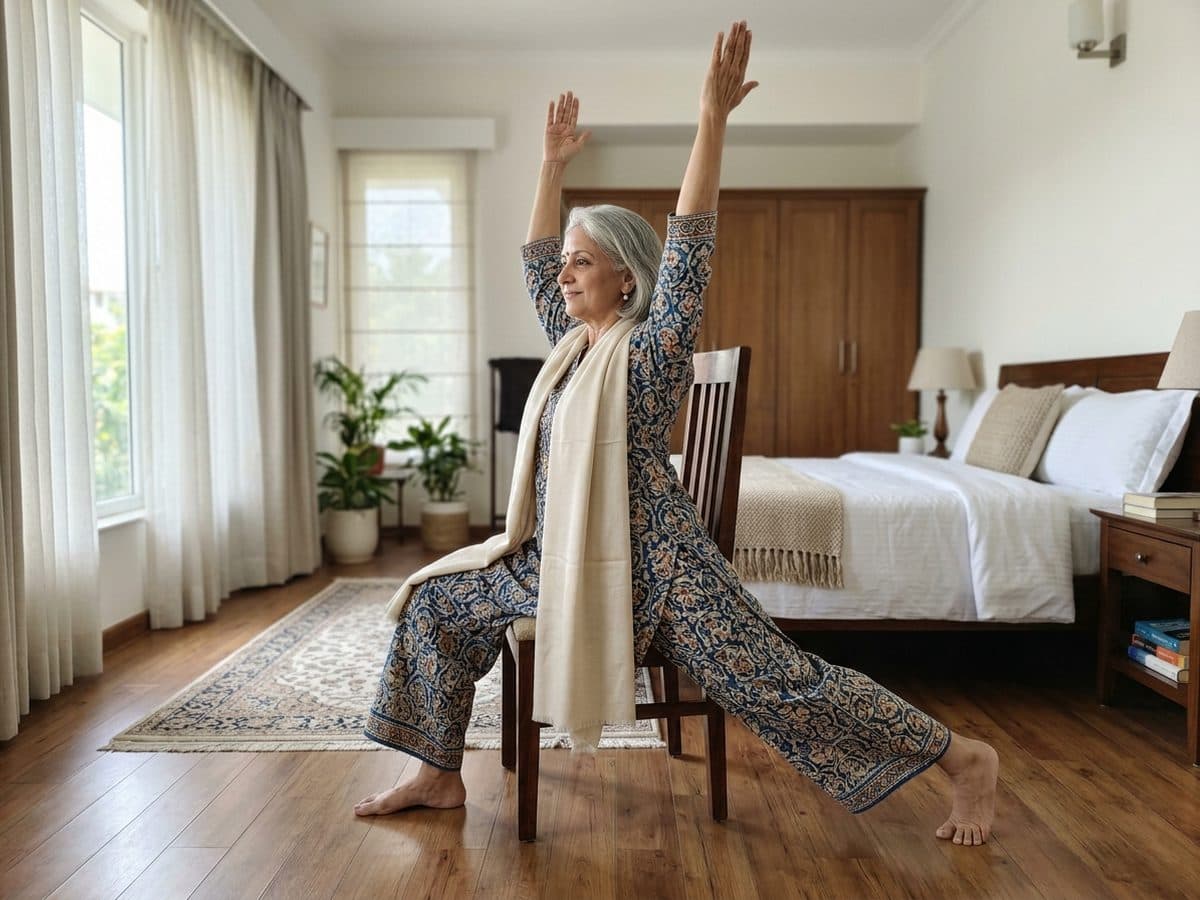
Adds gentle leg and arm work with a flowing rhythm, the closest chair yoga gets to a whole-body practice.
- Sit sideways on the chair so the right leg can extend back with the toes on the floor and the left knee stays bent over the foot.
- Breathe in and raise both arms overhead for warrior; breathe out and lower them.
- Return to centre, then flow: arms up on the in-breath, fold forward on the out-breath, hands to knees and lift the chest on the in-breath, sit tall on the out-breath. Repeat the warrior on the other side.
How much: 3 rounds of the flow, 1 warrior each side
Easier version: Leave out the warrior and do only the seated flow with the arms.
Stop if: Keep the bent knee over the ankle, not beyond the toes. Hold the chair with one hand if the sideways position feels unsteady.
Exercise 9
Closing breath: anulom-vilom
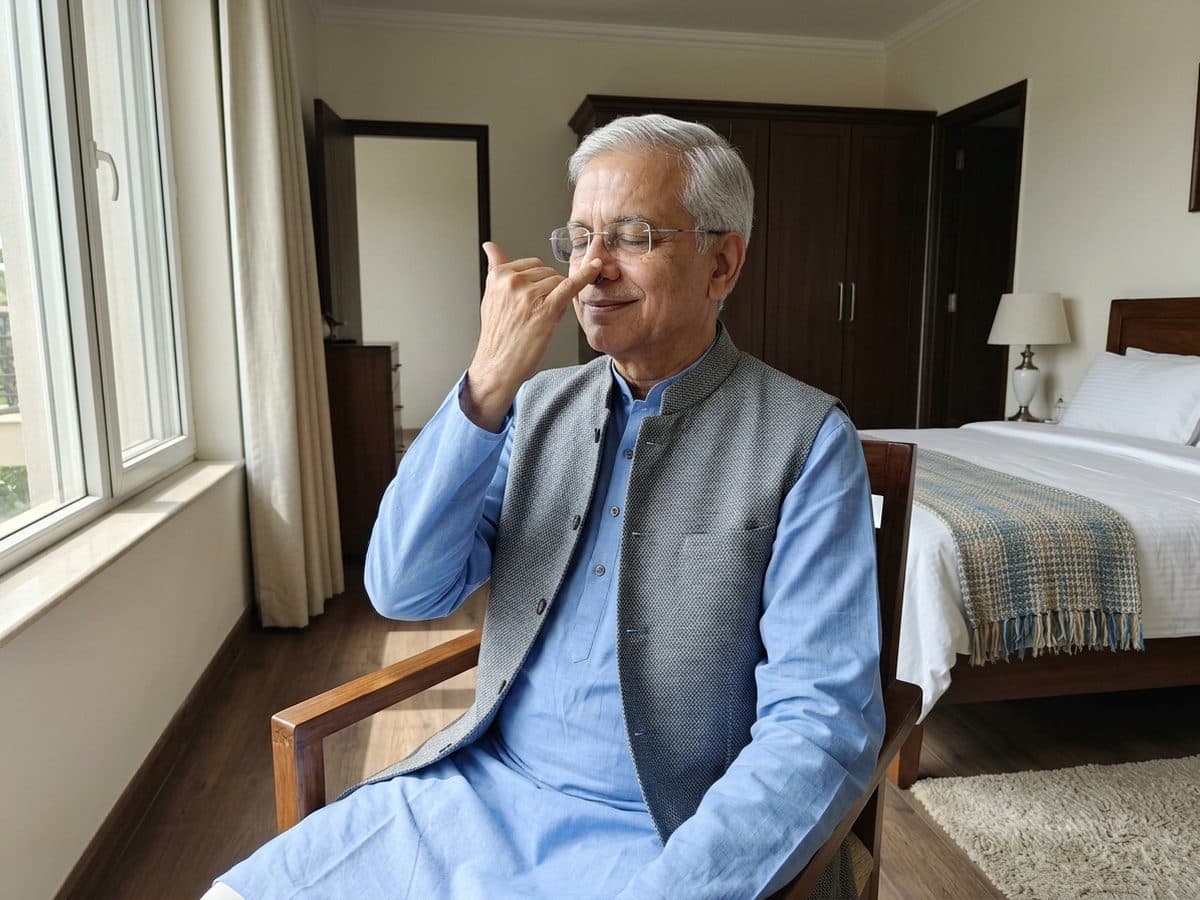
Alternate-nostril breathing settles the mind and finishes the practice with a slow heart rate.
- Sit tall, close the right nostril with the thumb, and breathe in slowly through the left.
- Close the left nostril with the ring finger, release the thumb, and breathe out through the right.
- Breathe in through the right, switch, breathe out through the left. That is one round.
How much: 5 to 10 rounds
Stop if: Never hold the breath if you have heart disease or high blood pressure. If breathing feels strained, return to normal breathing.
See a doctor before exercising if
- Chest pain, pressure or unusual breathlessness during practice.
- Dizziness or faintness that does not clear within a minute of sitting normally.
- Sudden numbness, tingling or weakness in an arm or leg.
- Sharp pain in a joint, as opposed to a gentle stretching feeling.
- Surgery in the last three months without clearance to exercise.
A 20-minute chair yoga sequence1 min read
This order moves from breath to spine to hips to a flowing finish, and back to breath. Do it daily if you like; chair yoga is gentle enough for every day.
- Minutes 0–3: seated mountain with 8 slow breaths, then roll the shoulders 5 times each way.
- Minutes 3–8: seated cat-cow, seated side bend, seated spinal twist.
- Minutes 8–12: seated forward fold, seated eagle arms.
- Minutes 12–17: chair pigeon on each side, then the chair warrior and adapted sun salutation.
- Minutes 17–20: anulom-vilom, then sit quietly for a minute with the eyes closed.
Who chair yoga suits, and who needs more1 min read
Chair yoga is ideal for parents who are stiff, anxious, recovering from illness, unsteady on their feet, or simply new to any exercise. It is a kind first step and a good daily habit at any age.
It is not enough on its own for the two things that most decide independence after 60: leg strength and balance. Getting off a low chair, climbing stairs, and catching yourself when you trip all depend on muscle that stretching does not build. A parent doing chair yoga should also do sit-to-stands, calf raises and similar strength work two or three times a week. Our guides on knee pain and lower back pain cover those moves.
Setting up safely1 min read
Almost every chair yoga injury comes from the chair, not the yoga.
- Use a firm dining chair without wheels or arms, on a non-slip floor. Never an office chair or a plastic garden chair.
- Put the back of the chair against a wall so it cannot tip when you lean on it.
- Wear loose clothing and bare feet or non-slip socks.
- Keep water nearby and practise at least an hour after a meal.
- Tell the coach or family member about any surgery, heart condition, glaucoma or vertigo before starting.
Chair yoga inside a full programme1 min read
Omfit's live classes are built on strength training, because that is what keeps parents independent, but every session includes mobility, stretching and breathing, and much of it is done with a chair for support. On the days without a live class, members receive short breathing and pranayam practices to do at home, so the calm of yoga runs through the whole week.
Because the classes are live on Zoom with nine parents and one coach, anyone who needs to stay seated for the whole session can, and the coach gives the chair version of each move as it comes up. Chair yoga is where many of our parents start; the strength work is where they end up.
Live classes for parents 55+
Get this done live, three times a week
Omfit's coaches run these progressions on Zoom for batches of nine parents. Health history reviewed before day one, every movement corrected as it happens, updates sent to the family.
12 live sessions · batch of 9 · 7-day refund · no auto-debit
Common questions1 min read
Is chair yoga good for senior citizens?+
Yes. It improves flexibility, posture, breathing and mood with very little risk, and it suits people who cannot get down to the floor. Its limitation is strength: pair it with simple leg-strengthening exercises to protect balance and independence.
Can chair yoga be done every day?+
Yes. The poses are gentle enough for daily practice. Strength exercises need a rest day in between, but stretching and breathing do not.
Does chair yoga help with knee pain?+
It helps stiffness and can ease discomfort by loosening the hips and thighs, but knee pain improves most with thigh-strengthening exercises such as sit-to-stands and seated knee extensions. Do both.
Is chair yoga safe with high blood pressure?+
Mostly yes, with two rules: do not hold the breath in any pose or breathing practice, and skip or shorten the forward fold if it makes you dizzy. Ask the doctor first if blood pressure is not yet under control.
Can chair yoga help me lose weight?+
Not much on its own; it burns few calories. It can be the start of moving more, which matters. For weight and blood sugar, add brisk walking and strength work to the routine.