Exercise for back pain: eight safe moves for a stiff lower back
Most lower back pain after 50 improves with movement, not rest. The eight exercises below wake up the deep muscles that support the spine, loosen tight hips, and teach the back to stay steady while you bend and lift. Each has a gentler version.
By the Omfit coaching team · Updated 12 September 2026 · 9 min read
A sore lower back is one of the most common complaints in Indian homes after 50. Years of sitting on the floor, long hours in a chair, bending over a stove or a bucket, and a weak core all add up. The good news is that for the ordinary, non-injury kind of back pain, lying down for days makes things worse. Gentle, regular movement is what doctors and physiotherapists recommend first.
The aim is not to stretch the back as far as it will go. It is to build the muscles of the abdomen, buttocks and back so they hold the spine steady, and to loosen the hips and hamstrings that pull on it. The moves below do exactly that. Go slowly, breathe normally, and stop at mild discomfort rather than pushing through pain.
Why exercise reduces lower back pain1 min read
- The deep abdominal and back muscles act like a natural belt around the spine. When they are weak, the small joints and discs take the load instead.
- Tight hamstrings and hip flexors from long sitting tilt the pelvis and strain the lower back. Stretching them gives the spine room.
- Strong buttocks let you bend and lift from the hips instead of rounding the back, which is how most everyday flare-ups start.
- Movement improves blood flow to the discs and eases the stiffness that builds up overnight or after sitting.
The exercises4 min read
Exercise 1
Pelvic tilt
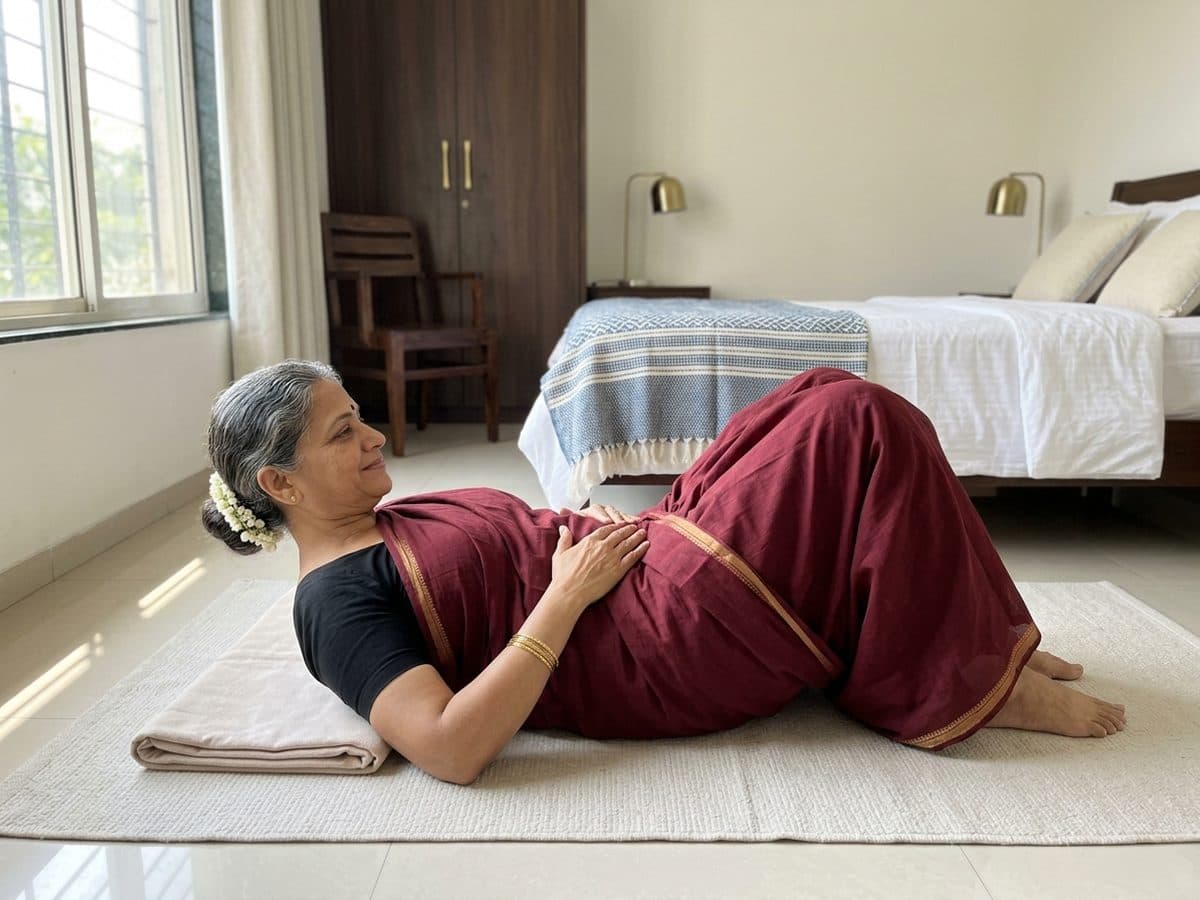
The foundation move. Teaches the deep abdominal muscles to support the lower back with no load on the spine.
- Lie on your back with knees bent and feet flat, or sit tall on a firm chair.
- Gently tighten the lower belly and flatten the small of the back towards the floor or chair, as if tucking the tailbone under.
- Hold for 5 seconds, breathing normally, then relax.
How much: 10 repetitions, 2 rounds
Easier version: Do it seated with both hands resting on the lower belly to feel the muscles tighten.
Stop if: This is a small movement. Do not push hard with the legs or hold your breath.
Exercise 2
Knee-to-chest stretch
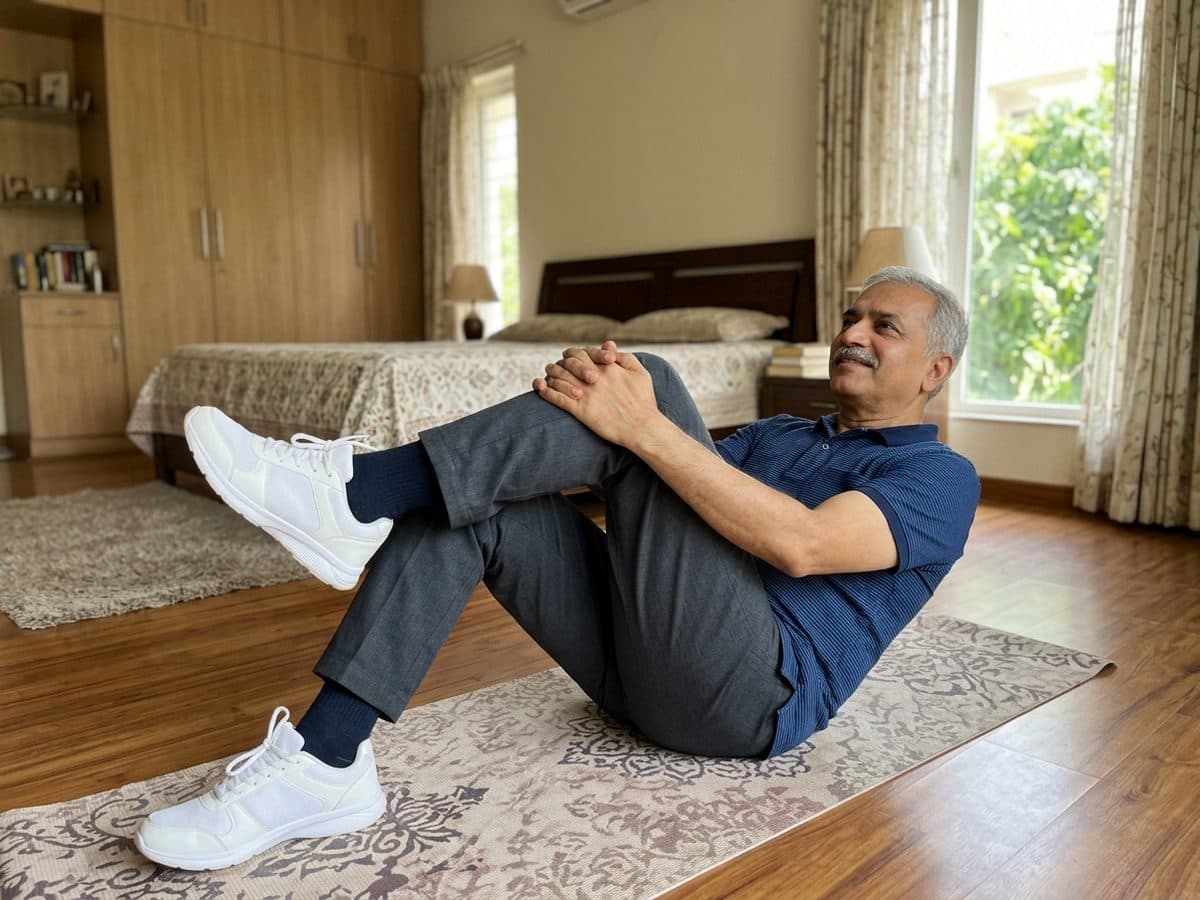
Loosens the lower back and the buttock muscles that tighten after sitting.
- Lie on your back with both knees bent.
- Hold one knee behind the thigh and draw it gently towards your chest.
- Hold for 20 seconds, then lower and repeat on the other side.
How much: 2 holds each leg
Easier version: Sit on a chair and lift one knee a few centimetres with your hands, holding it there.
Stop if: Keep the other foot flat on the floor. Stop if you feel pain going down the leg.
Exercise 3
Cat-cow

Moves the whole spine gently through bending and arching, which eases morning stiffness.
- Start on hands and knees, or sit on a chair with hands on your thighs.
- Breathe in and slowly arch the back, lifting the chest and looking slightly up.
- Breathe out and slowly round the back, tucking the chin and tailbone.
How much: 8 slow cycles
Easier version: Do the seated version with the hands on the knees and a very small range.
Stop if: Move only as far as is comfortable. Never force the arch or the round.
Exercise 4
Bird dog
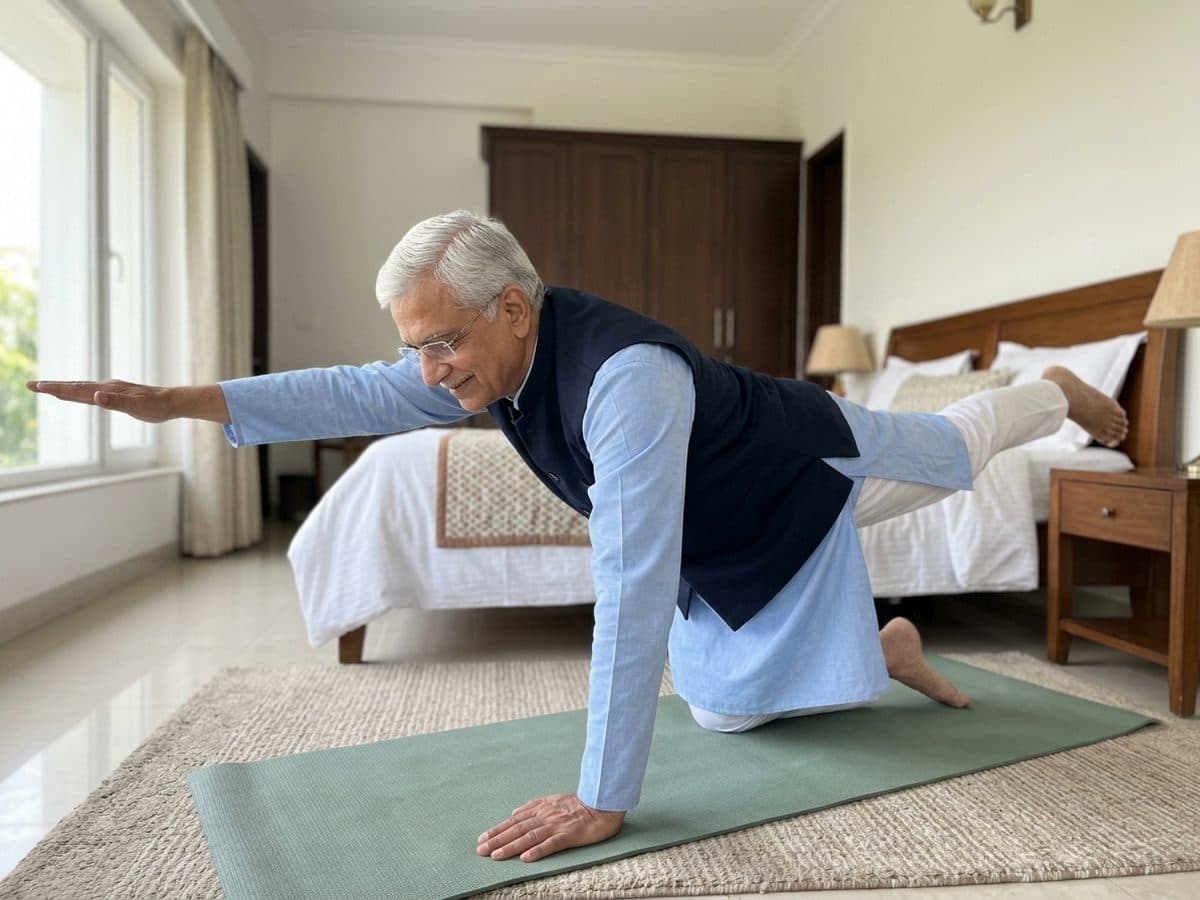
Builds the back and abdominal muscles together while the spine stays still. It is the exercise physiotherapists most often prescribe for a weak lower back.
- Start on hands and knees, hands under shoulders and knees under hips, back flat.
- Slowly straighten one leg behind you, keeping the hips level and the back still.
- If steady, also reach the opposite arm forward. Hold 3 seconds, then return and switch sides.
How much: 6 repetitions each side
Easier version: Do the leg only, or do it seated: sit tall, straighten one knee and raise the opposite arm, holding 3 seconds.
Stop if: Do not lift the leg above hip height or let the lower back sag. If your wrists or knees hurt on the floor, use the easier version.
Exercise 5
Glute bridge
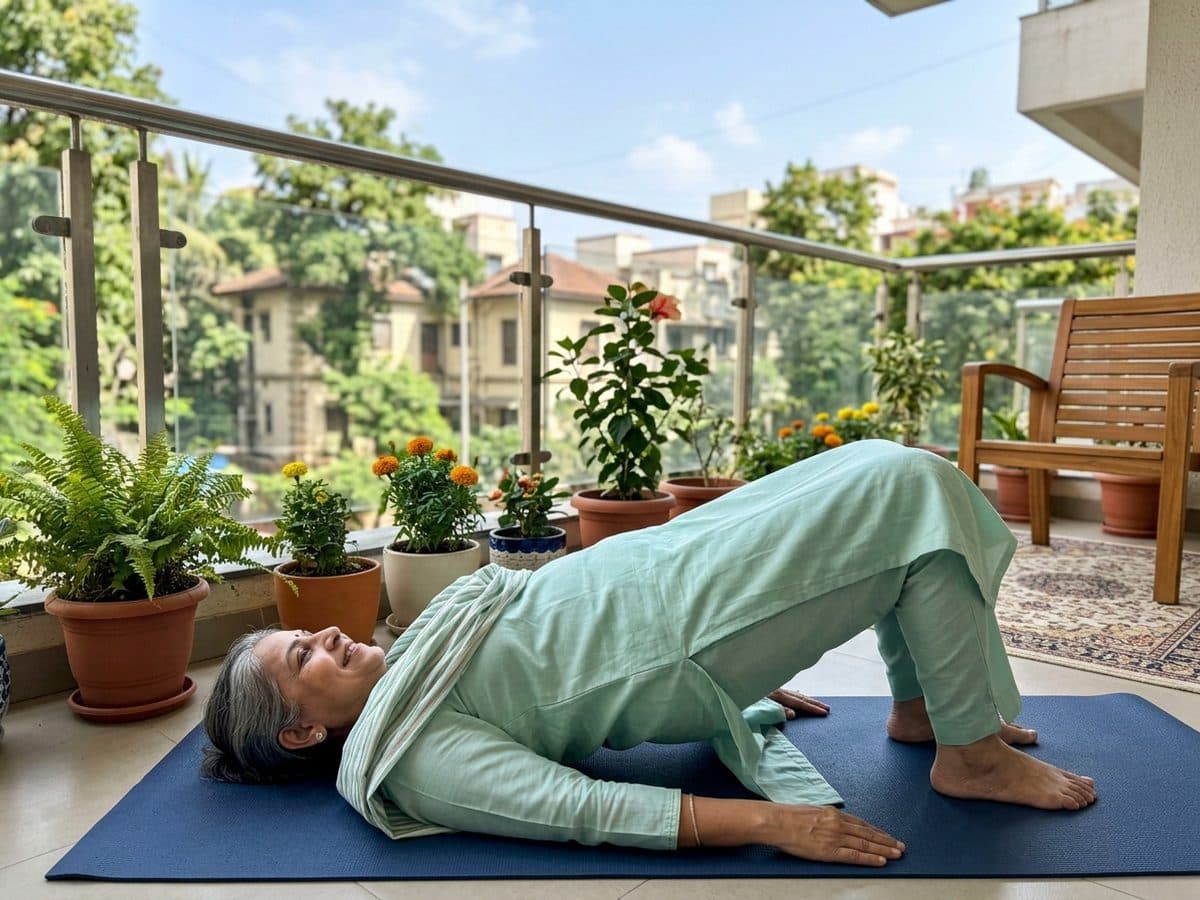
Strengthens the buttocks and hamstrings so they, and not the lower back, do the work of lifting and climbing.
- Lie on your back with knees bent, feet flat and hip-width apart.
- Squeeze the buttocks and lift the hips until the body forms a straight line from shoulders to knees.
- Hold 3 seconds, then lower slowly.
How much: 10 repetitions
Easier version: Lift the hips only a few centimetres off the floor.
Stop if: Do not push the hips up so high that the lower back arches. Stop if you feel cramping in the hamstring.
Exercise 6
Seated hamstring stretch
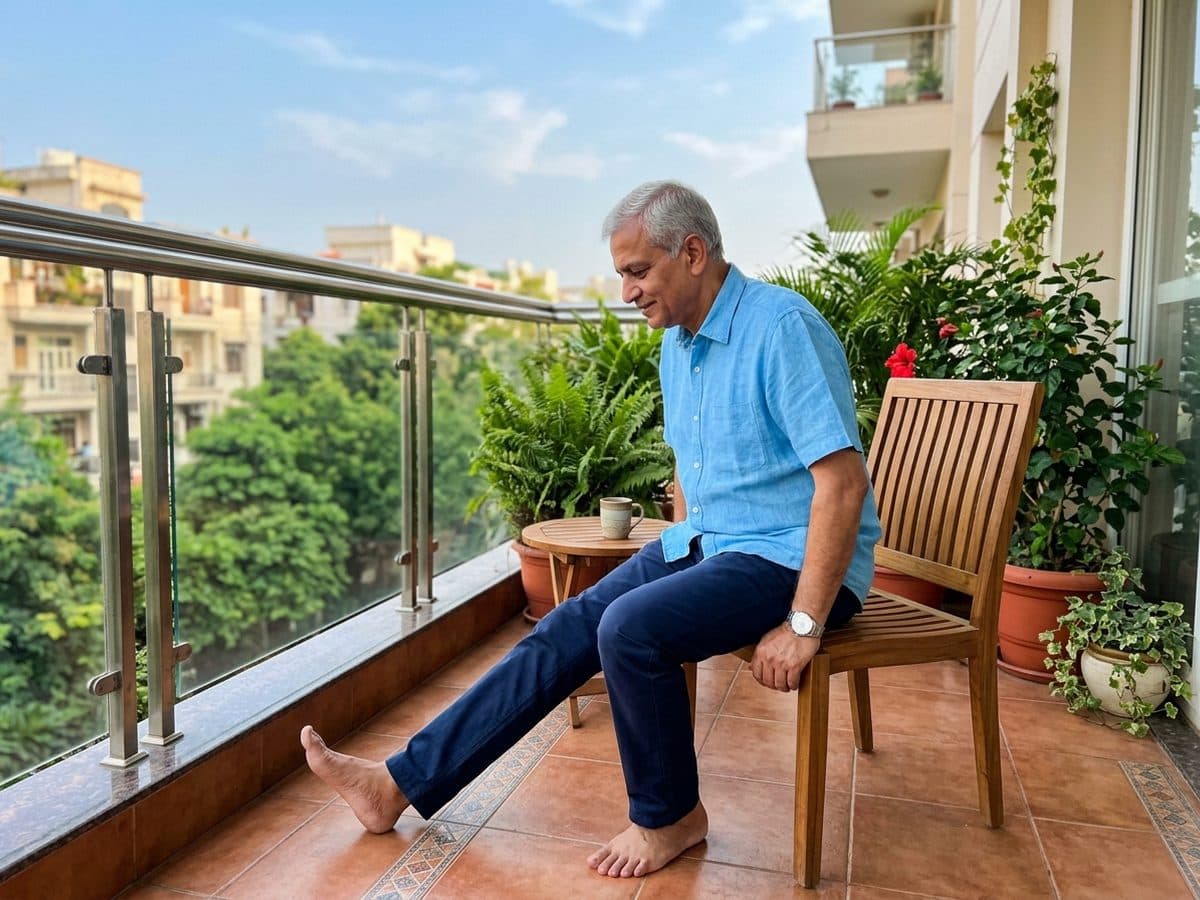
Tight hamstrings pull the pelvis backwards and strain the lower back when you bend.
- Sit on the front half of a chair and straighten one leg, heel on the floor, toes up.
- Keep the back straight and lean forward from the hips until you feel a stretch behind the thigh.
- Hold 20 to 30 seconds, breathing normally.
How much: 2 holds each leg
Stop if: Lean from the hips with a straight back. Do not round forward to reach the toes.
Exercise 7
Chair-supported hip hinge

Teaches the bending pattern that protects the back when you pick something up or wash at a low tap.
- Stand facing the back of a chair, hands resting on it, feet hip-width apart.
- Keeping the back straight and knees slightly soft, push the hips backwards as if closing a drawer with your bottom.
- Go until you feel a stretch behind the thighs, then squeeze the buttocks and stand tall.
How much: 10 repetitions, 2 rounds
Easier version: Hinge only a small way, keeping the hands firmly on the chair.
Stop if: The back stays flat the whole way. If you feel it rounding, stop higher.
Exercise 8
Dead bug
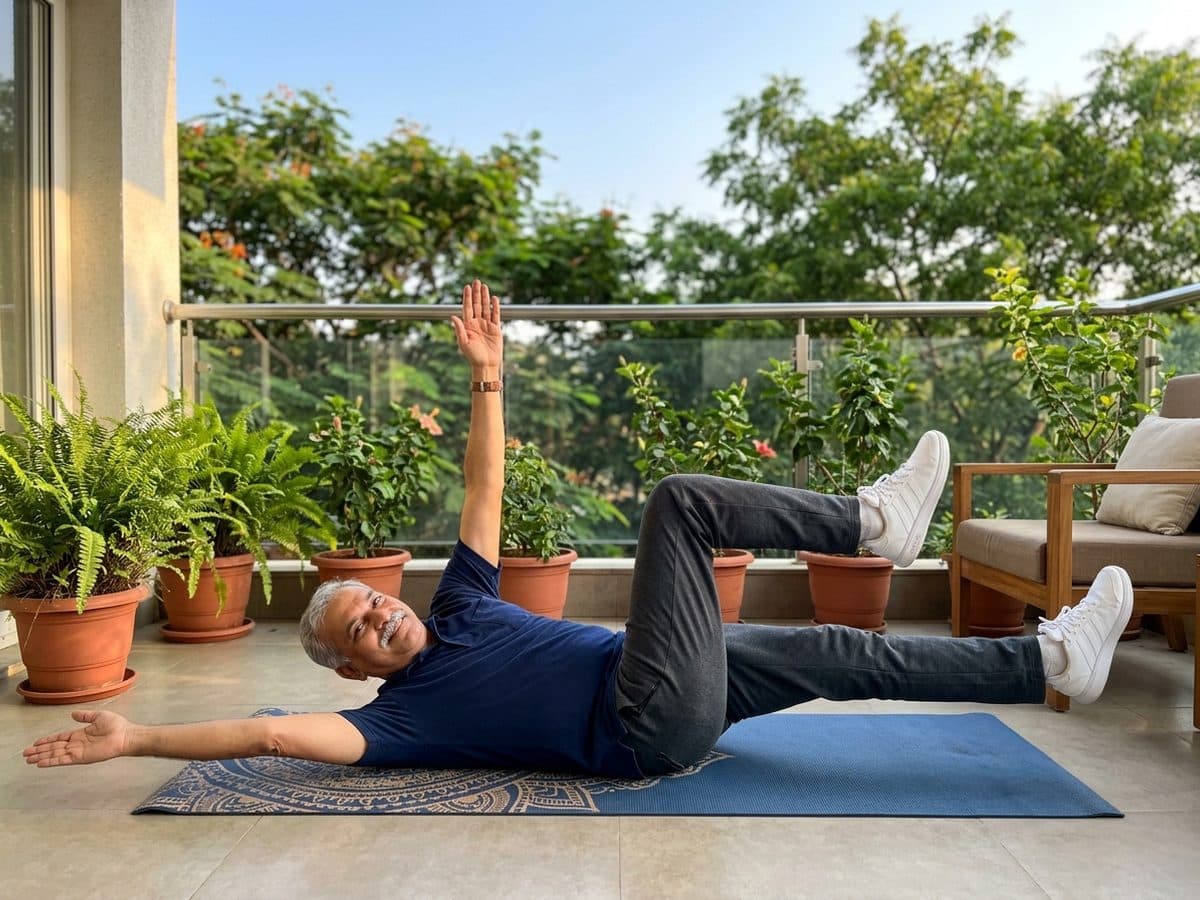
Trains the abdomen to keep the back still while the arms and legs move, which is what walking and lifting demand.
- Lie on your back with knees bent and feet flat. Gently flatten the lower back into the floor.
- Slowly slide one heel along the floor until the leg is nearly straight, keeping the back flat.
- Slide it back and repeat with the other leg.
How much: 8 repetitions each leg
Easier version: Keep the feet on the floor and just march the knees up one at a time, a few centimetres.
Stop if: If the lower back lifts off the floor, shorten the movement. Do not hold your breath.
See a doctor before exercising if
- Pain, numbness or weakness travelling down one or both legs.
- Any change in bladder or bowel control, or numbness around the groin. This is an emergency.
- Back pain after a fall, especially if you have osteoporosis.
- Pain that wakes you at night, comes with fever, or with unexplained weight loss.
- Pain that has not eased at all after two weeks of gentle movement.
A 12-minute back routine, three times a week1 min read
Daily gentle movement is fine, but the strengthening exercises need a rest day in between. A simple routine for someone starting out looks like this.
- Warm up: 2 to 3 minutes of walking around the house or marching on the spot.
- Pelvic tilt and cat-cow: 1 round each to loosen up.
- Bird dog, glute bridge, dead bug: 1 round each, resting 30 seconds between.
- Hip hinge: 1 round of 10.
- Finish with knee-to-chest and the seated hamstring stretch.
- After 3 weeks, add a second round of the strengthening moves.
What to avoid with a painful lower back1 min read
Several exercises that people reach for first actually strain a sore back. Leave these out until a physiotherapist clears you.
- Standing toe-touches with a rounded back. They load the discs at the exact point that is already sore.
- Sit-ups and leg raises with straight legs. They pull on the hip flexors and grind the lower back into the floor.
- Twisting while bending or carrying, such as swinging a bucket or lifting a grandchild sideways.
- Bouncing in any stretch.
- Sudden heavy lifting after weeks of rest. Build up gradually.
Ergonomics: avoid holding one posture for more than 20 minutes1 min read
Exercises take 12 minutes. The other 23 hours matter just as much. Small changes to how you sit, stand and sleep take the daily strain off the lower back.
- Sit with the hips slightly higher than the knees and a small cushion or rolled towel behind the lower back. Get up and walk for a minute every 30 to 40 minutes.
- If you sit on the floor for long, sit against a wall or use a low stool. Long cross-legged sitting rounds the back.
- Bend from the hips and knees, not the waist, when washing clothes, filling buckets or picking things up.
- On a two-wheeler or long car ride, stop and walk every 30 minutes.
- Sleep on your side with a pillow between the knees, or on your back with a pillow under the knees. A very soft mattress lets the back sag.
Doing these with a coach watching1 min read
The commonest mistakes in home back exercise are invisible to the person doing them: a sagging lower back on the bird dog, a rounded spine on the hip hinge, or holding the breath and straining. Each one turns a helpful exercise into the thing that triggered the pain.
Omfit's live classes put a certified coach on a Zoom call with a batch of nine parents, three times a week. The coach watches every back, corrects form in real time, and gives the seated or Level 1 version to anyone whose back is sore that day. Parents with chronic back pain, disc problems or osteoporosis are given their modifications before the first class, based on the health form the family fills in, and the coach has worked with those conditions before.
Live classes for parents 55+
Get this done live, three times a week
Omfit's coaches run these progressions on Zoom for batches of nine parents. Health history reviewed before day one, every movement corrected as it happens, updates sent to the family.
12 live sessions · batch of 9 · 7-day refund · no auto-debit
Common questions1 min read
Which exercise is best for lower back pain?+
For most people over 55 the bird dog and the pelvic tilt together give the best return. The pelvic tilt teaches the deep abdominal muscles to switch on, and the bird dog strengthens the back and abdomen while the spine stays still. Add the glute bridge so the buttocks take over lifting from the back.
Should I rest or exercise when my back hurts?+
For ordinary back pain without leg symptoms, one or two days of lighter activity is fine, but bed rest beyond that slows recovery. Keep walking short distances and start the gentle moves like pelvic tilt and knee-to-chest as soon as they are comfortable.
Is walking good for lower back pain?+
Yes. A daily walk on level ground is one of the best things for a stiff back, and it is safe for almost everyone. It does not build the core strength you need on its own, so pair it with the strengthening exercises two or three times a week.
Can I do these exercises with a slipped disc or sciatica?+
Only after your doctor or physiotherapist has seen you. Some of these moves are commonly prescribed for disc problems, but the choice depends on which direction of movement eases your pain. Never continue any exercise that sends pain, tingling or numbness down the leg.
How long before back pain improves with exercise?+
Stiffness usually eases within a week or two of daily gentle movement. Real strength in the supporting muscles takes 4 to 6 weeks of exercising two or three times a week, and that is when most people notice bending and standing up become easier.