Knee replacement recovery exercises, phase by phase
After a knee replacement, the new joint only works as well as the muscles around it. The exercises below follow the usual recovery phases, from ankle pumps in the first days to step-ups at three months. They supplement your surgeon's and physiotherapist's programme; they never replace it.
By the Omfit coaching team · Updated 12 September 2026 · 9 min read
A total knee replacement (TKR) fixes the worn joint surface. It does not fix the weak thigh muscles and stiff tissues that built up over years of pain. That is your job in the weeks after surgery, and it is the part most people under-do. Patients who keep up their exercises regain bending range and walk without a stick sooner; those who rest "until it stops hurting" often end up with a stiff knee that needs more treatment.
Your surgeon and hospital physiotherapist will give you a written protocol. Follow it first. This guide explains what those exercises are doing, in what order they usually come, and how to keep going at home once the hospital visits stop. If anything here disagrees with what your surgical team told you, your team is right.
Why exercise decides how well a knee replacement turns out1 min read
- The quadriceps muscle switches off after surgery. Until it is retrained, the knee feels unstable and gives way on stairs.
- Scar tissue forms in the first six weeks. Bending the knee regularly in that window is what stops it from setting stiff.
- Moving the ankle and calf keeps blood flowing and lowers the risk of a clot in the leg.
- Walking a little, often, teaches the new knee a normal walking pattern before limping becomes a habit.
The exercises3 min read
Exercise 1
Ankle pumps

The first exercise after surgery. Keeps blood moving through the calf and reduces swelling.
- Lie or sit with the operated leg straight and supported.
- Pull the toes up towards you, then point them away.
- Keep a slow, steady rhythm, one second each way.
How much: 20 pumps every hour you are awake in the first two weeks
Stop if: Ankle pumps are safe from day one. If the calf itself becomes painful, swollen or hot, stop and call your surgeon the same day.
Exercise 2
Quad sets (static thigh squeeze)
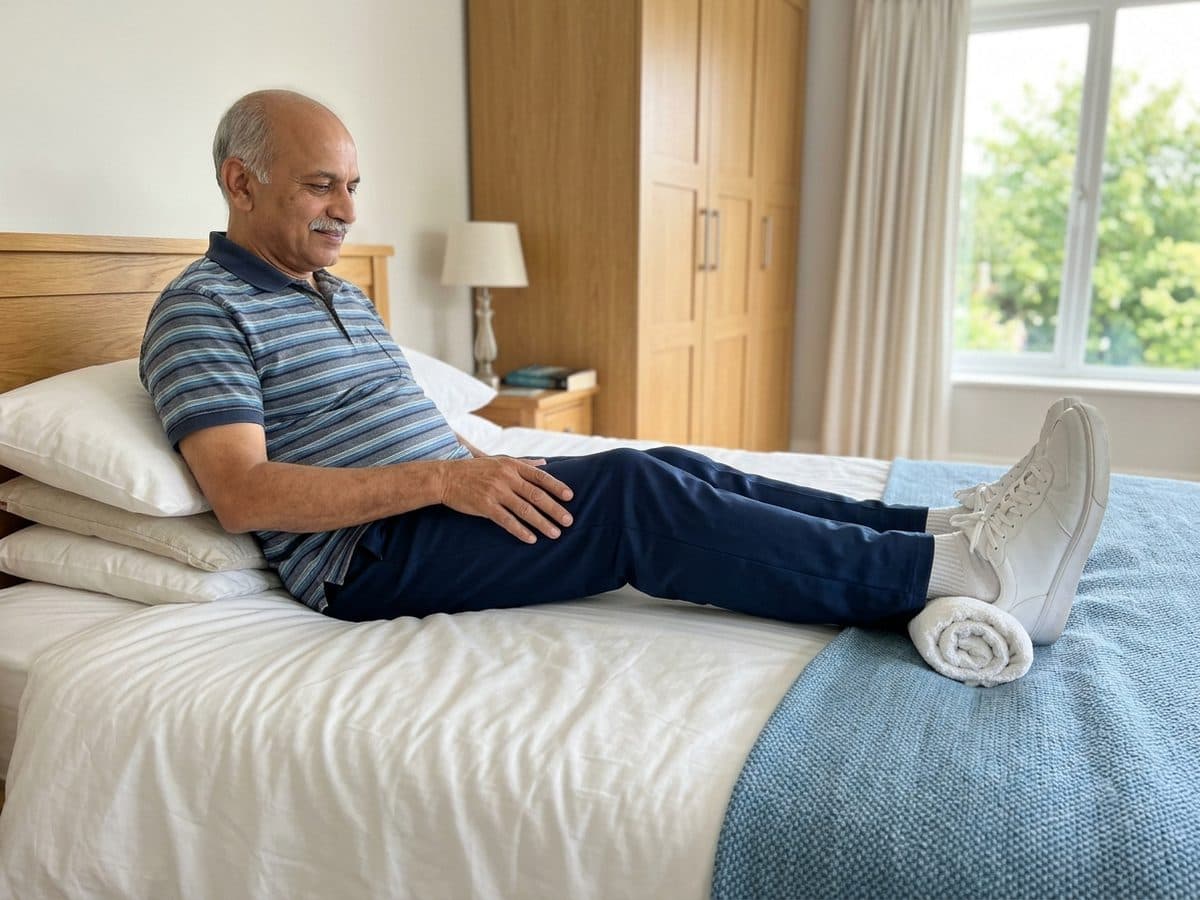
Wakes up the quadriceps, which stops working properly after surgery.
- Lie on your back with the operated leg straight and a rolled towel under the ankle.
- Press the back of the knee down towards the bed by tightening the front of the thigh.
- Hold 5 seconds, feeling the kneecap pull upward, then relax.
How much: 10 squeezes, 3 times a day
Easier version: Hold for 2 seconds and rest longer between squeezes.
Stop if: Do not hold your breath. A pulling feeling around the incision is normal; sharp pain inside the knee is not.
Exercise 3
Heel slides
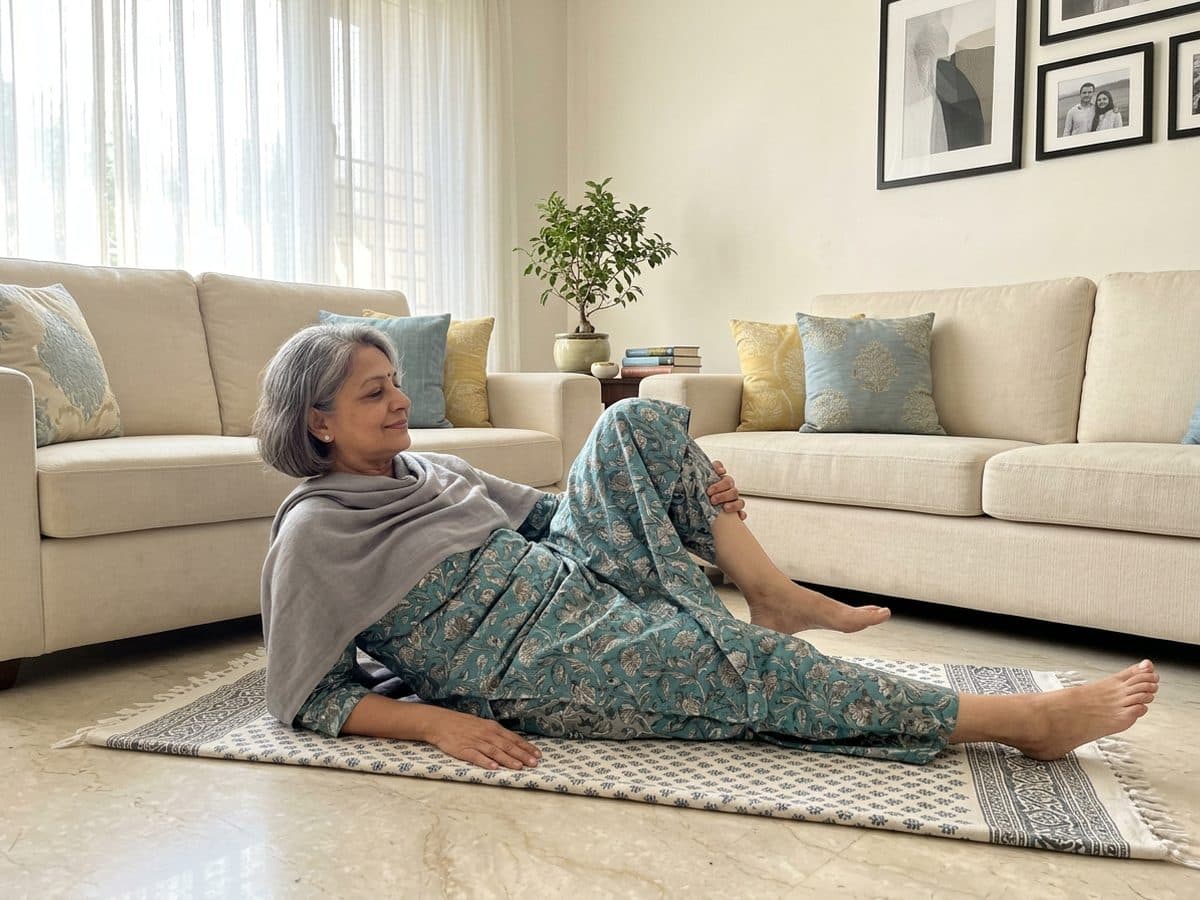
The main exercise for getting the bend back. Range of bending in the first six weeks predicts the final result.
- Lie on your back with both legs straight.
- Slide the heel of the operated leg towards your buttock, bending the knee as far as comfortable.
- Hold 5 seconds at the end, then slide back slowly.
How much: 10 slides, 3 times a day
Easier version: Place a plastic bag or a smooth cloth under the heel so it slides with less friction.
Stop if: Expect a firm stretch and mild pain that fades within minutes. If bending range suddenly drops from one day to the next, tell your physiotherapist.
Exercise 4
Straight-leg raise
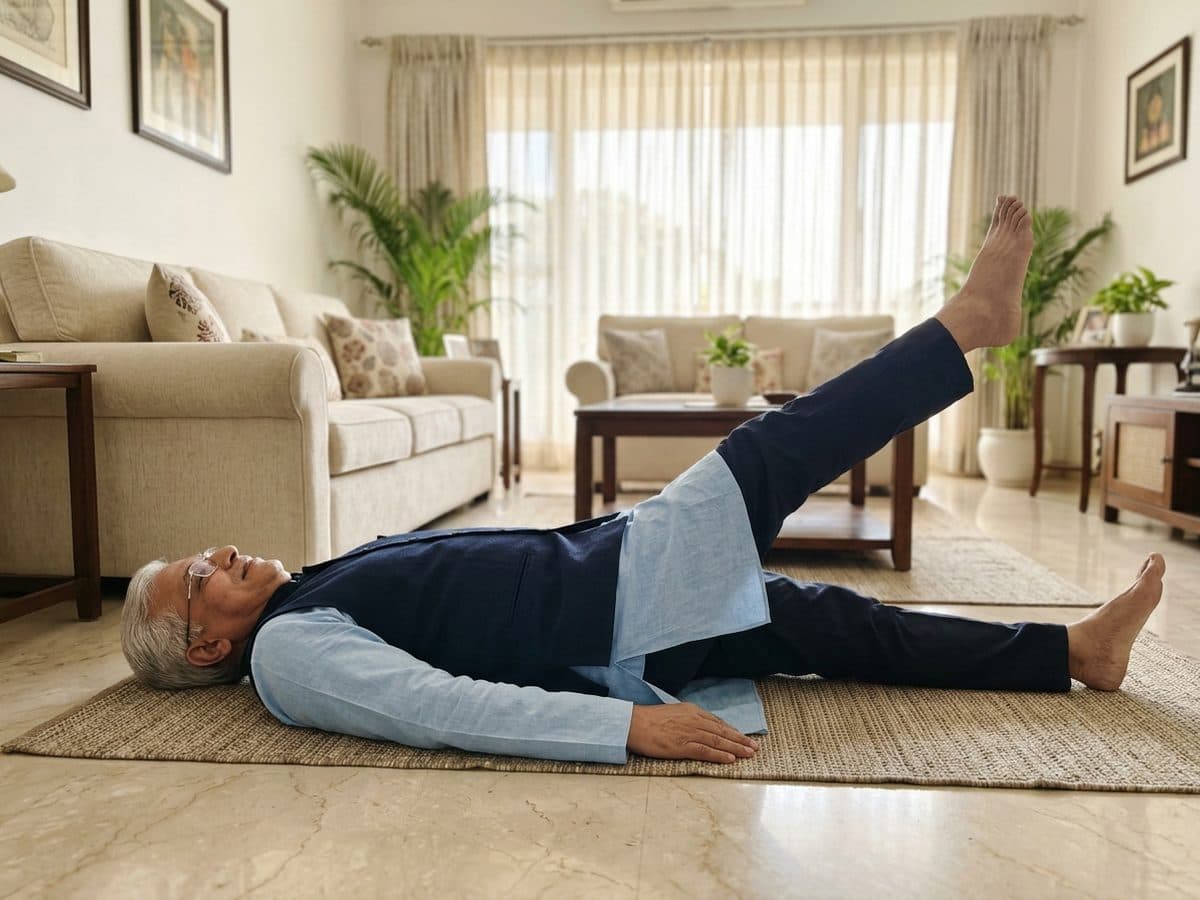
Builds the thigh strength you need to lift the leg into bed or into a car.
- Lie on your back with the other knee bent and foot flat.
- Tighten the thigh of the operated leg and keep the knee fully straight.
- Lift the leg about 30 cm, hold 3 seconds, lower slowly.
How much: 10 lifts, 2 rounds
Easier version: Lift only 10 cm off the bed.
Stop if: If the knee bends as you lift, you are not ready; go back to quad sets for a few more days.
Exercise 5
Seated knee bend with the other leg helping

Adds bending range once you can sit in a chair, using the good leg as a gentle assistant.
- Sit on a firm chair with both feet on the floor.
- Cross the good ankle in front of the operated ankle.
- Use the good leg to push the operated foot back under the chair until you feel a stretch, hold 5 seconds, release.
How much: 10 repetitions, 2 times a day
Stop if: Push only to a firm stretch, never to sharp pain. Do not bounce.
Exercise 6
Sit-to-stand
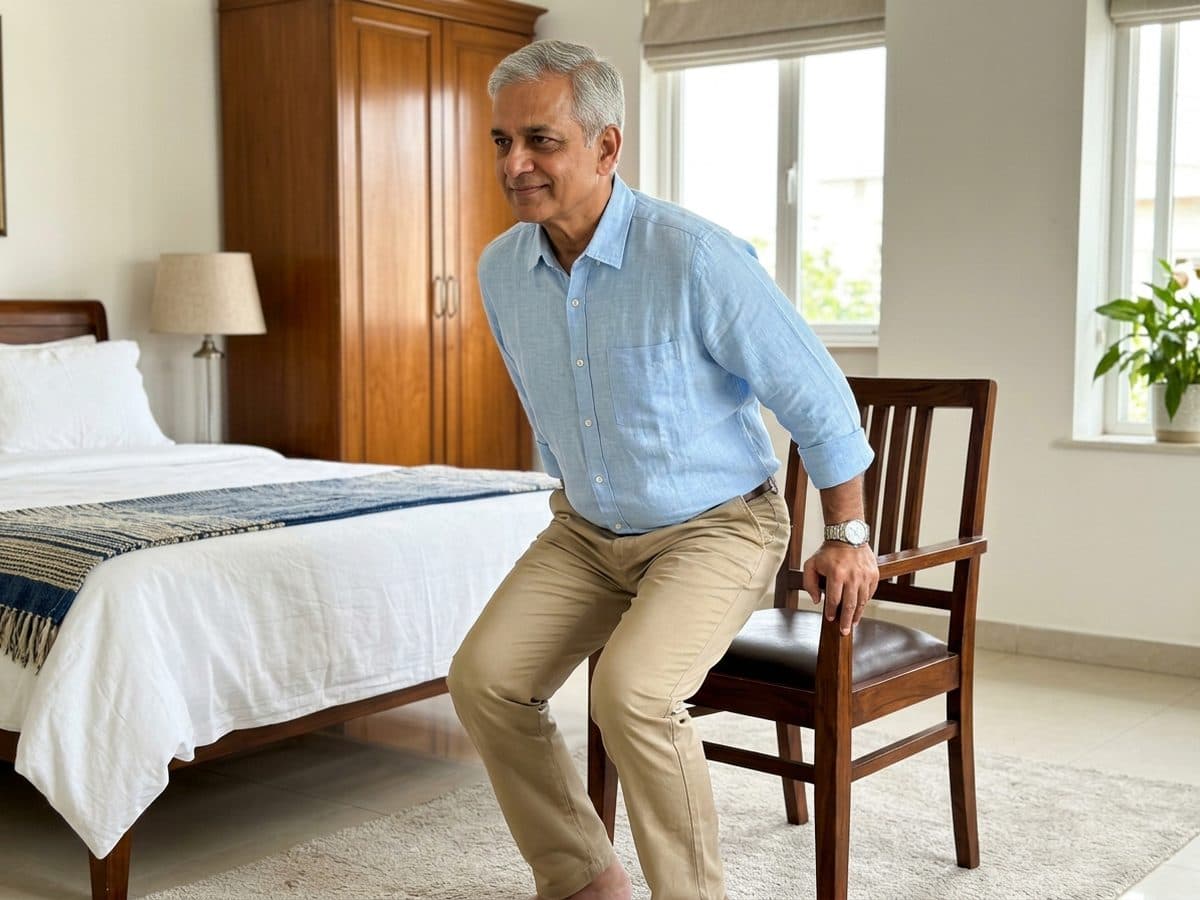
From about week 2 onwards, this rebuilds the thigh and hip strength that daily life depends on.
- Sit on the front half of a sturdy, high chair with arms.
- Push through both heels and the chair arms to stand up.
- Lower slowly over 3 seconds, sharing weight between both legs.
How much: 8 repetitions, 2 rounds
Easier version: Add a cushion to the seat so you do not have to bend as far.
Stop if: Keep the operated knee pointing over the toes. Use your hands as much as you need in the early weeks.
Exercise 7
Step-ups on a low step
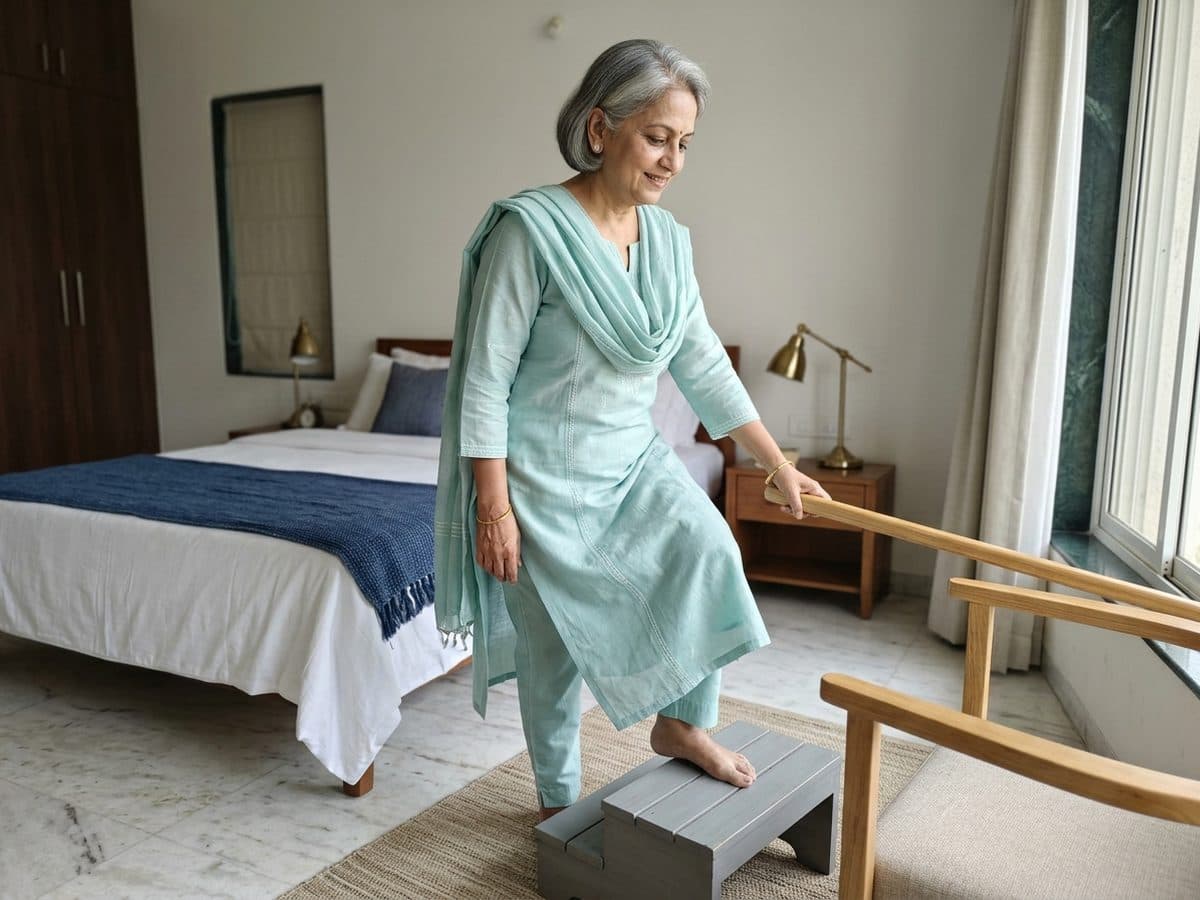
From around week 6, prepares the knee for stairs with a smaller, controlled load.
- Stand facing a single low step or a thick book, holding a rail or wall.
- Step up with the operated leg, bring the other foot up beside it.
- Step down leading with the good leg.
How much: 10 step-ups, 2 rounds
Easier version: Use a lower step, or practise just placing the foot on the step and taking it off.
Stop if: Only start once you can do a sit-to-stand without hands. Stop if the knee gives way or swells afterwards.
Exercise 8
Stationary cycling or marching on the spot
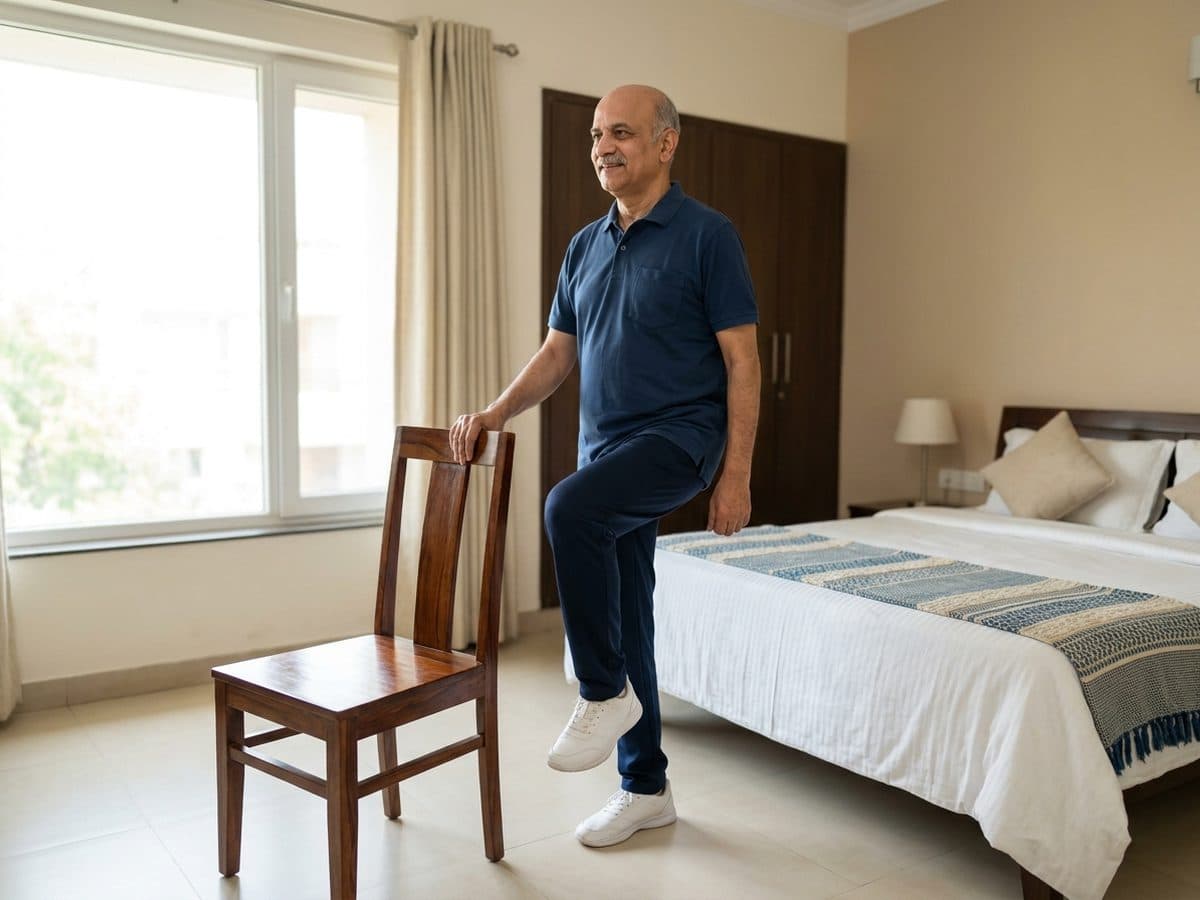
Gentle repeated bending keeps the knee moving and rebuilds stamina without impact.
- On a stationary bike, set the seat high and pedal backwards and forwards half-turns until a full turn is possible.
- Without a bike, march on the spot holding a chair, lifting each knee to a comfortable height.
- Keep the pace slow and even.
How much: 5 minutes, building to 15 minutes by month three
Stop if: No resistance on the bike until your physiotherapist clears it. Stop if swelling increases the next morning.
See a doctor before exercising if
- Pain, swelling, warmth or tenderness in the calf: this can be a clot and needs same-day medical attention.
- Fluid, pus or blood leaking from the wound, or the wound edges opening.
- Fever, chills, or the knee becoming hot and red.
- A sudden loss of bending range that was there the day before.
- Chest pain or breathlessness, at any time in the first weeks.
- The knee giving way or locking so that you cannot stand on it.
The recovery timeline, in plain terms1 min read
Every patient is different and surgeons use different protocols, but most recoveries follow the same broad shape. Use this as a map, not a schedule.
- Weeks 0–2: ankle pumps, quad sets, heel slides, straight-leg raises. Walking short distances indoors with a walker or stick. Aim for the knee to bend to 90 degrees by the end of week 2.
- Weeks 2–6: add seated knee bends and sit-to-stands. Walk further each day, moving from walker to stick. Swelling should be shrinking week on week.
- Weeks 6–12: add step-ups and cycling. Most people are walking without a stick and climbing stairs one step at a time. Bending should reach 110–120 degrees.
- 3 months and beyond: strength work two or three times a week for at least a year. This is when general exercise classes become appropriate, with your surgeon's go-ahead.
When is a supervised group class safe again?1 min read
The usual answer is after three months, once your surgeon is happy with the wound, the range of bending, and your walking. Before that, the exercises need to be specific to your knee and checked by a physiotherapist who can see and feel the joint.
Omfit asks every member who has had surgery in the past three months to get their doctor's consent before joining, for exactly this reason. Once you are past that window, a coach-supervised class is a good way to keep the strength gains going, because the hardest part of month four onwards is not the exercises; it is doing them consistently once the hospital appointments stop.
Common mistakes after a knee replacement1 min read
These come up again and again in people whose recovery has stalled.
- Resting too much. Pain after exercise that settles by the next morning is normal and expected.
- Sleeping with a pillow under the knee. It feels comfortable but trains the knee to stay bent. Put the pillow under the ankle instead.
- Skipping heel slides because they hurt. They are the exercise that most decides your final bending range.
- Walking with a limp for weeks because the stick was dropped too early. Use the stick until you can walk evenly without it.
- Stopping all exercise at three months because the knee "feels fine". Thigh strength keeps improving for a year if you keep working it.
Life after the three-month mark, with a coach watching1 min read
Once the surgeon has signed off, the risk shifts from the knee to the routine. Most people slowly stop exercising in months four to six, and the strength they built drains away. A fixed class time, a coach who knows about the knee, and eight other parents expecting you to turn up solves that.
Omfit places members with knee replacements into the same batches as everyone else, with modifications set before day one from the health form the family fills in. Every exercise has a Level 1 version, the coach can see on Zoom whether the operated knee is tracking over the toes, and progress is reported back to the family. Several of our members joined after a knee replacement; the programme is not a substitute for the post-operative physiotherapy that comes before it.
Live classes for parents 55+
Get this done live, three times a week
Omfit's coaches run these progressions on Zoom for batches of nine parents. Health history reviewed before day one, every movement corrected as it happens, updates sent to the family.
12 live sessions · batch of 9 · 7-day refund · no auto-debit
Common questions1 min read
How long does knee replacement recovery take?+
Most people walk without a stick by 6 to 12 weeks and return to everyday activities by 3 months. Strength and confidence keep improving for a full year, which is why exercise matters long after the wound has healed.
Which exercises should I avoid after a knee replacement?+
Avoid deep squats, kneeling on hard floors, running, jumping and sitting cross-legged until your surgeon says otherwise. Many surgeons advise against high-impact sport permanently. Cycling, walking and swimming are usually encouraged.
How much should I bend my knee after replacement?+
A common target is 90 degrees by two weeks and 110 to 120 degrees by three months. Your physiotherapist will measure this at each visit. If the bend stops improving or goes backwards, tell them straight away.
Is it normal for the knee to be swollen and warm while exercising?+
Mild warmth and swelling are normal for the first few months and usually increase a little after exercise. Swelling that is worse every morning, or a knee that is warm and red, is not normal and should be checked.
When can I join an exercise class after knee replacement?+
Usually after three months, once your surgeon has cleared you. Choose a class that is supervised live, allows a chair, and asks about your surgery before you start. Omfit requires doctor consent for any surgery in the past three months.